How Far Can Walkie Talkies Reach? Range Guide & Facts
What walkie talkie range really looks like in UK conditions — and how to get coverage that does not stop at the next hill

If you have ever wondered how far can walkie talkies reach, the honest answer depends on the device, the terrain and what stands between the two users. Most consumer walkie talkies claim two to three miles but rarely hit that in real conditions. Professional radios do better, yet even they run into hard limits once buildings, hills or distance get in the way.
Short answer: a licence-free walkie talkie realistically covers a few hundred metres in a built-up area and one to two miles across open ground. A professional licensed radio manages one to three miles in a town and around five miles with clear line of sight. Only a repeater or a PoC radio running over the mobile network goes further than that.
This guide breaks down real world range, what affects it and how modern communication tools solve the problem for good.
What Is a Walkie Talkie and How Does Range Work?
A walkie talkie sends your voice as a radio frequency signal through the air to another device tuned to the same channel. The stronger and clearer that signal stays, the further it reaches. If you want the full mechanism — transmitters, modulation and the push-to-talk button itself — our companion guide explains how walkie talkies work step by step.
Traditional radios work on either UHF or VHF frequency bands. UHF handles obstacles like walls and buildings better, which makes it popular for cities and job sites. VHF travels further in open, flat areas with fewer obstructions, which is why it suits rural or coastal work.
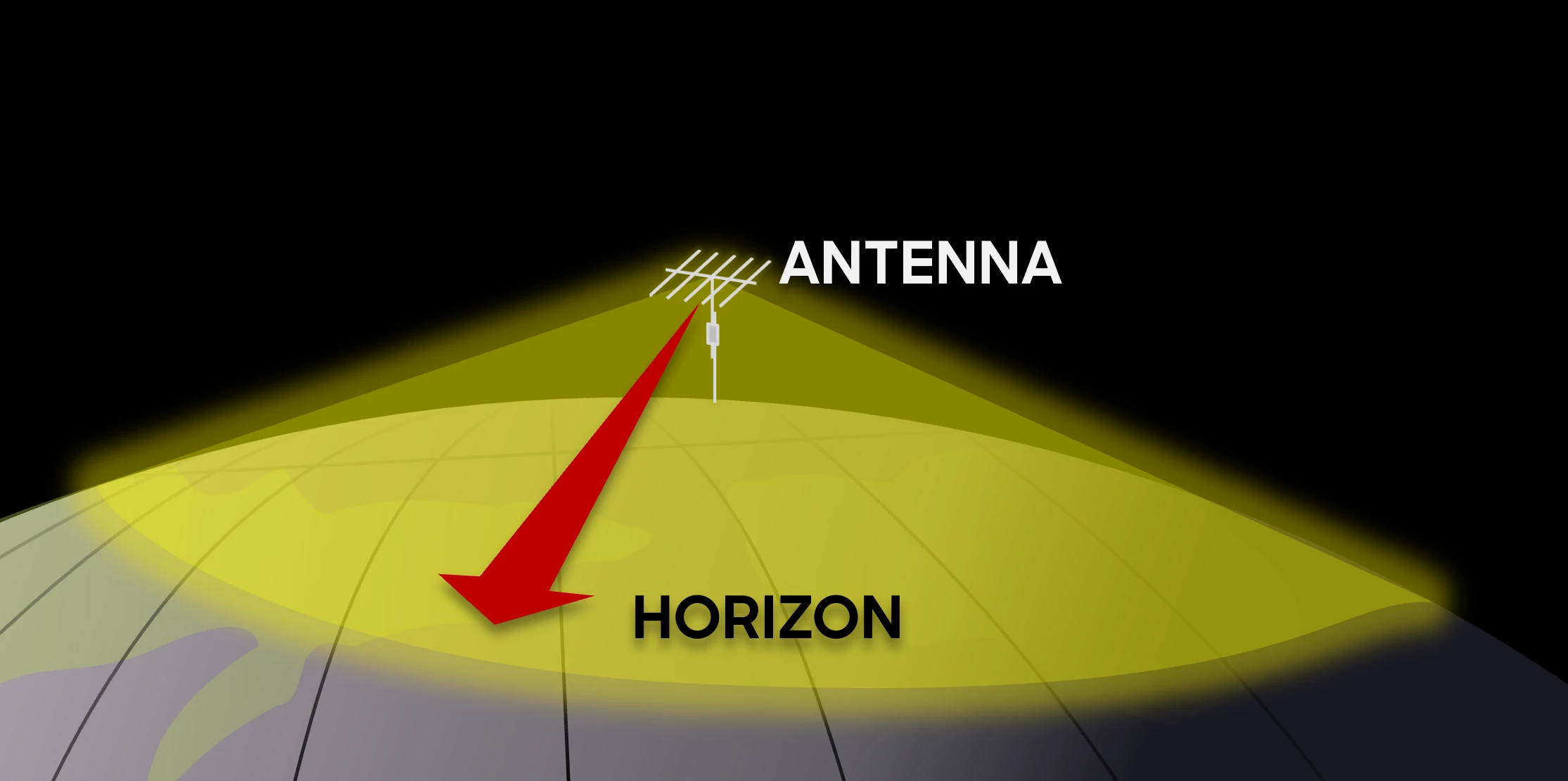
Digital radios generally offer clearer audio and slightly better range efficiency than older analogue models, though both still rely on line of sight and signal strength.
Why UK licence-free radios fall short of the box
In the UK, radio spectrum is regulated by Ofcom. The licence-free walkie talkies sold in high street shops run on PMR446, a shared band at 446 MHz that anyone can use without a licence — but the rules that make it licence-free are exactly what caps the range:
- A maximum of 500 mW ERP — half a watt, against the several watts a licensed business radio may use
- A fixed integral antenna, so the single easiest range upgrade is not legally available
- A shared, unprotected band, so other users on your channel are something you work around rather than something you can stop
Those limits are set out in Ofcom’s guidance on licence-exempt devices. Higher power and better antennas are available, but only under a Business Radio licence.
Average Walkie Talkie Range: Real World Numbers
Manufacturers advertise big numbers, but actual performance tells a different story once you factor in obstacles and terrain. Here is how the main options compare.
| Radio type | Advertised range | Realistic UK range |
|---|---|---|
| Consumer / toy (PMR446) | Up to 2–3 miles | A few hundred metres built up; 1–2 miles open ground |
| Professional UHF / VHF handheld | 5 miles and up | 1–3 miles urban; around 5 miles with clear line of sight |
| Repeater-based system | Site or town wide | Roughly 10–15 miles from a well-sited repeater |
| PoC radio (4G / 5G) | “Unlimited” | Anywhere with mobile coverage — nationwide UK |
Consumer and toy walkie talkies
Advertised up to two to three miles, but realistically closer to a few hundred metres in built up areas. Those headline figures assume two radios on hilltops with nothing between them — a condition almost no real user ever meets.
Professional UHF and VHF two-way radios
Three to fifteen miles depending on terrain, antenna quality and elevation. The top of that band belongs to vehicle-mounted or base station installs with a high antenna; handheld to handheld sits far nearer the bottom.
Repeater-based systems
These extend range significantly by relaying the signal from a fixed base station, sometimes covering an entire town or site. The trade-off is infrastructure: a repeater needs a licence, a mast position, power and maintenance, and it only covers the area it was sited for.
This is exactly why so many businesses search for long range walkie talkies UK wide, only to find that terrain and buildings still get in the way no matter how good the radio is.
Key Factors That Affect Walkie Talkie Range
Range is never just about the device. Several outside factors decide how far your signal actually travels.
- Line of sight and terrain — hills and valleys block signal fast, and radio waves do not bend around them
- Buildings and obstructions — dense urban areas cut range dramatically compared to open rural land
- Frequency band — UHF and VHF behave differently around obstacles, so the right choice depends on where you work
- Antenna quality and height — a taller or better antenna almost always improves reach, where the licence allows one
- Battery and power output — a weak battery weakens your signal well before the radio stops working
- Weather and atmospheric conditions — storms and heavy humidity can interfere with transmission
Walkie Talkies vs PoC Push-to-Talk Over Cellular Radios
Traditional radios are bound by radio waves, which means their range always has a ceiling no matter how good the equipment is. Our full breakdown of PoC radios vs traditional two-way radios compares the two systems on cost, security and scalability as well as coverage.
Why Traditional Radios Are Limited by Distance
Once you move beyond the radio’s effective range, or you cross a hill, tunnel or thick wall, the signal drops and communication simply stops. There is no graceful degradation and no warning — one moment the team is contactable, the next it is not. This is the core limitation every team using a long distance two way radio setup eventually runs into.
How PoC Radios Remove Range Limitations Entirely
Push to Talk over Cellular radios use 4G, 5G and WiFi networks instead of traditional radio frequency. Because the network carries the call rather than the handset, the question of how far can walkie talkies reach almost stops mattering: coverage extends anywhere a mobile network signal exists. Our guide to how PoC radios work covers the technology in detail.

This is where iPTT changes the game. iPTT provides rugged PoC radios, mobile apps, dispatcher software and multi network SIMs that give UK teams genuinely nationwide coverage, not just a few extra miles.
Field Test: What Range Looks Like Across the New Forest
Range arguments are easy to have on paper, so we took a set of PoC handsets and multi network SIMs out across the New Forest to see what happened. It is a useful test because it is the worst of both worlds: wide open heath where a traditional radio should do well, and patchy mobile coverage where a network-based radio should struggle.
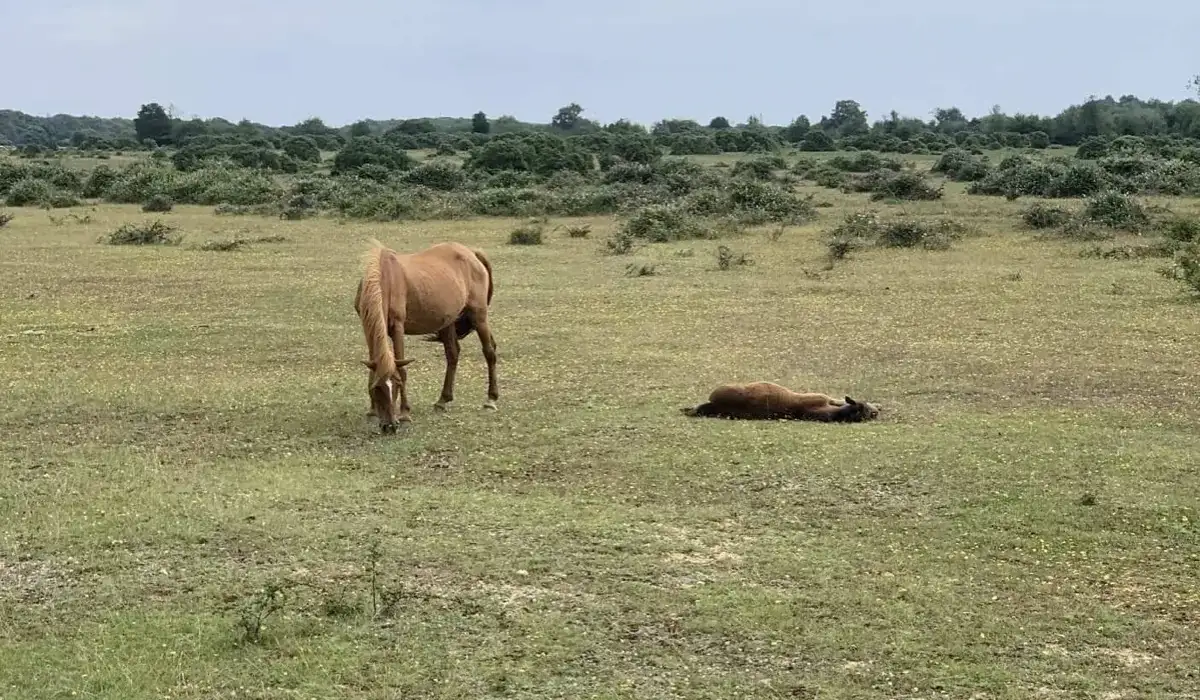
Terrain like the photo above is where VHF does its best work — flat, open, almost nothing to block a signal. Drop into the wooded sections or put a rise between two handsets and the picture changes immediately. The handsets stayed in contact across the whole route, because a multi network SIM hands the call to whichever of the four UK networks is strongest at that spot rather than depending on one operator’s footprint.
Read the full write-up of our PoC field test in the New Forest for the route and the results.
Industries That Need Long-Range, Reliable Communication
Different industries face different range challenges, and each one needs a solution built for how they actually work.
- Construction and site management — teams spread across large or multi level sites need coverage that does not drop between floors or blocks. See our construction communication guide for the site-specific detail.
- Logistics and fleet operations — drivers need constant contact across counties, not just a few miles from base
- Emergency services and security teams — cannot afford dead zones when seconds matter, which is why security communication devices are chosen on coverage first
- Retail and hospitality — multi site businesses need one connected system across every location
iPTT supports each of these sectors with GPS tracking, dispatcher software and secure communication built directly into every device.
How to Extend Walkie Talkie Range
If you are stuck with limited range, there are practical ways to improve performance before switching systems entirely.
- Use a repeater to relay your signal further across a site or town
- Upgrade to a stronger, taller antenna — worth noting this is only an option on licensed business radio, since PMR446 handsets must keep their fixed integral antenna
- Position users on higher ground or upper floors, because elevation buys more range than power does
- Switch to PoC radios for coverage that is effectively nationwide
For teams that keep hitting the same wall, moving to iPTT’s PoC devices removes the range problem completely instead of just patching it. The iPTT P400 rugged radio is the usual starting point, with the iPTT P500 as a second option for teams that want a larger display and extra features.
Why Choose iPTT for Long-Range, Reliable Communication
- Nationwide coverage — multi-network SIMs keep your team connected across the entire UK, not just a local radius
- Rugged PoC radios — built to handle tough job sites, harsh weather and daily wear without failing
- GPS tracking and dispatcher software — full visibility of every team member from one central dashboard
- Secure, encrypted communication — conversations stay private and protected on every call
- Trusted UK provider — relied on by construction, logistics, emergency response and retail businesses across the country
Frequently Asked Questions
How far can a walkie talkie reach in open areas?
In flat, open terrain with no obstructions, professional radios can reach several miles, though most consumer models fall well short of advertised distances.
Do walkie talkies work through buildings?
UHF radios handle walls and buildings better than VHF, but thick concrete or multiple floors will still weaken the signal noticeably.
What is the difference between UHF and VHF range?
UHF suits urban areas and indoor use, while VHF performs better across open, flat land with fewer obstacles.
Can walkie talkies reach across a city?
Rarely without a repeater. Buildings, interference and distance make city wide coverage difficult for standard radios.
Is there a walkie talkie with unlimited range?
Traditional radios always have a limit. PoC radios come closest to unlimited range since they rely on mobile networks instead of radio frequency.
Conclusion
So how far can walkie talkies reach in the real world? Usually far less than the box promises, and always limited by terrain, buildings and power output. If your team needs communication that does not drop off after a few miles, it is time to move beyond traditional radios.
Need reliable, nationwide communication beyond the limits of traditional walkie talkies? Explore iPTT’s SIM and PoC radio options or contact our team and keep your team connected wherever work takes them.
Coverage That Does Not Stop at the Next Hill
Talk to iPTT about rugged PoC radios and multi network SIMs that give your team nationwide UK coverage instead of a few miles of line of sight.