Best Radios for Construction Sites in the UK: Site Communication Systems Guide
Compare traditional two-way radios and modern PoC systems to find the right communication solution for your building site
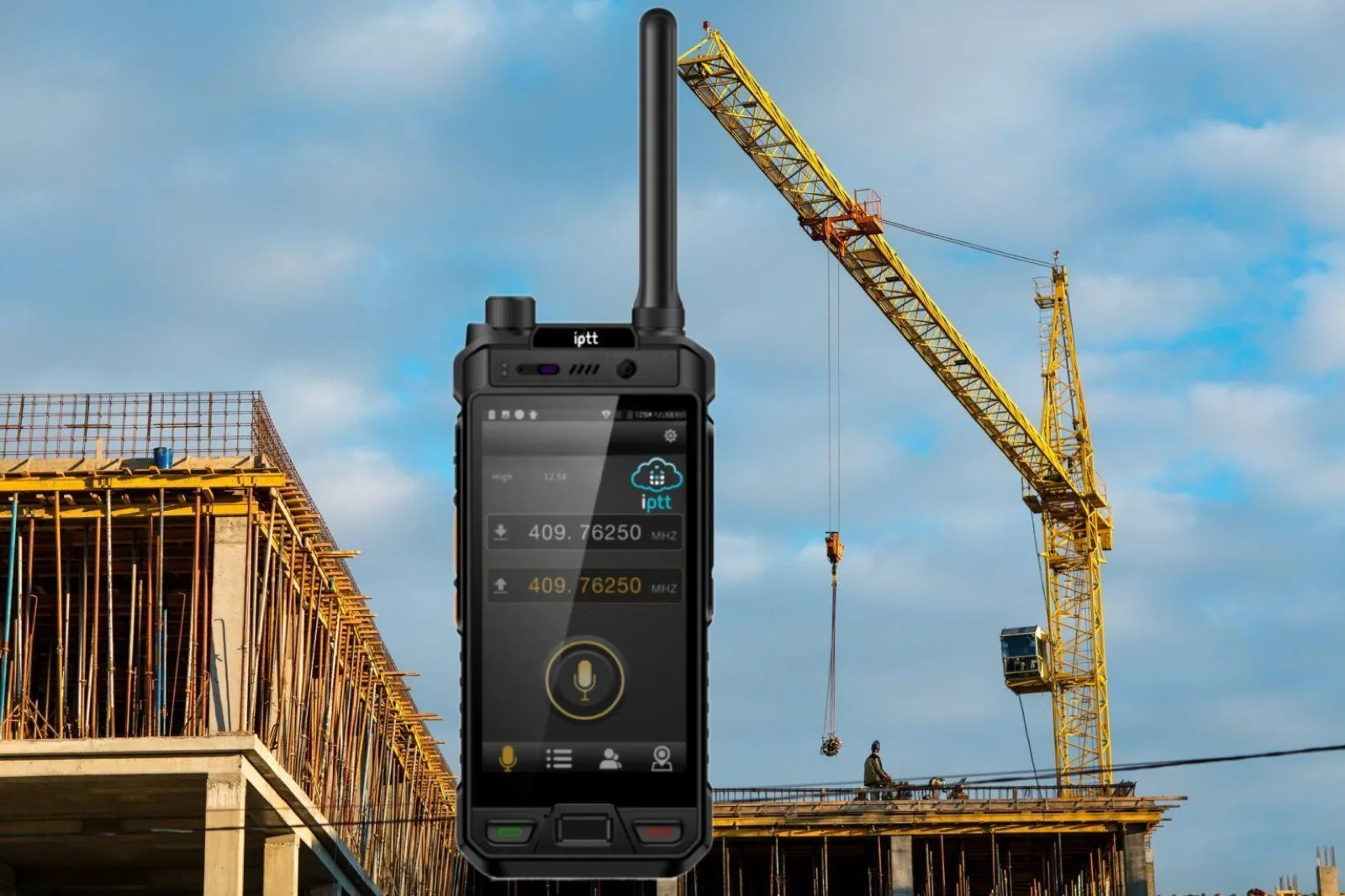
Reliable communication is essential on construction sites. From coordinating deliveries and managing contractors to responding quickly to safety issues, clear and instant communication helps keep projects moving and workers protected.
Construction environments are busy, noisy and constantly changing. Teams are often spread across large areas, working at height, underground or inside reinforced structures where mobile phone signals can struggle. This makes choosing the right site radios an important operational decision rather than a simple equipment purchase.
This guide explains how site radios are used on UK construction projects, compares traditional two-way radios with modern Push to Talk over Cellular solutions and helps you decide which option best suits your site.
Why Reliable Communication Matters on Construction Sites
Construction sites are high-risk environments where clear communication directly affects safety and efficiency. Site managers need to relay instructions quickly, supervisors must coordinate teams across different areas and workers need a reliable way to raise concerns or request assistance.
Poor communication can lead to delays, misunderstandings and increased risk during complex situations. For lone workers or large multi-contractor projects, the ability to reach the right person instantly is essential — a principle that applies equally to workers in isolated or high-risk environments. This is why communication systems are often included as part of wider health and safety planning on UK building sites.
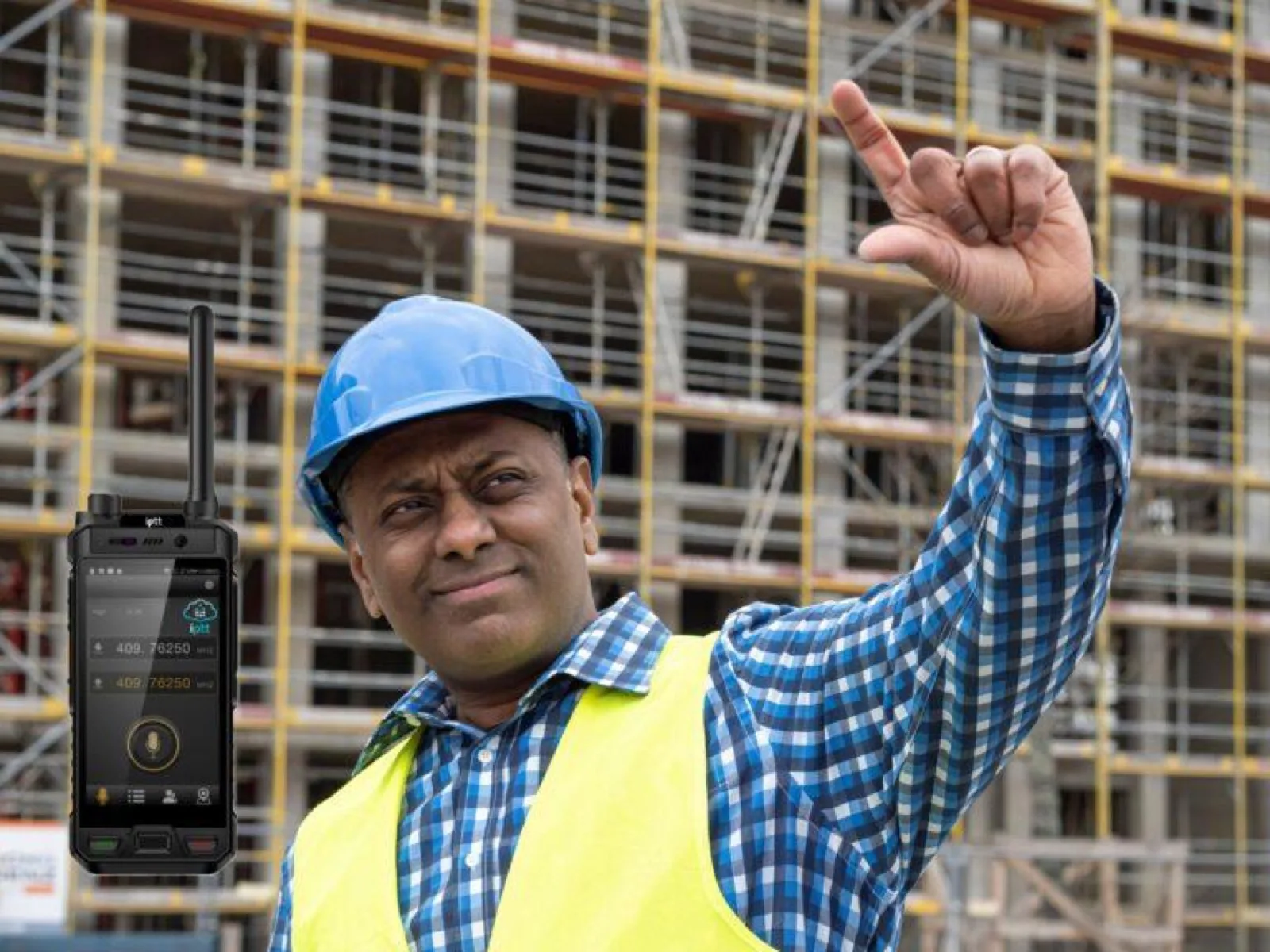
What Are Site Radios?
Site radios are communication devices designed to allow instant voice communication between workers, supervisors and control points. Unlike mobile phones, they do not rely on dialling numbers or stable call connections. Instead, they allow users to speak immediately to individuals or groups at the press of a button.
On construction sites, radios are typically used to manage vehicle movements, coordinate lifts, report hazards, respond to incidents and keep teams aligned throughout the working day. Their simplicity and speed make them a practical tool in environments where hands-free or fast communication is required.
Watch how radios support safety and coordination on active construction sites:
Traditional Two-Way Radios on Construction Sites
How Two-Way Radios Work on Site
Traditional two-way radios use radio frequencies such as UHF or VHF to transmit voice messages directly between devices. When a user presses the push to talk button, their voice is broadcast to other radios tuned into the same channel.
Benefits of Traditional Construction Radios
These radios have been used on UK building sites for decades and remain effective for short-range communication within a small area. They do not rely on mobile networks, which can be useful on remote sites or during temporary power issues.
- No dependency on mobile network infrastructure
- Instant push-to-talk with no call setup delay
- Simple, rugged and familiar for site workers
- Lower upfront cost for contained single-site deployments
- Functional in areas with no mobile coverage
Limitations on Large or Complex Sites
However, traditional radios have limitations. Their range is affected by buildings, steel structures, elevation changes and site size. Communication can become unreliable across multi-storey developments or large sites unless additional equipment such as repeaters is installed. As projects expand, managing coverage and maintaining infrastructure can become complex and costly.
For more information on radio licensing requirements for construction sites, the Ofcom business radio guidance provides detail on spectrum use and licensing obligations for professional radio users in the UK.
Modern Alternatives: Push-to-Talk over Cellular (PoC)
What Are PoC Radios?
Push to Talk over Cellular, often shortened to PoC, offers a modern alternative to traditional site radios. Instead of using radio frequencies, PoC systems transmit voice as secure data over 4G and 5G mobile networks.
Why PoC Radios Are Changing Construction Communication
PoC radios provide the same instant communication experience as traditional radios but without the range limitations. As long as there is mobile coverage, teams can communicate across entire towns, regions or even nationwide — with approximately 96% of the UK having good outdoor 4G coverage. This makes PoC particularly useful for construction firms managing multiple sites or mobile teams.
Modern PoC systems also support advanced features such as GPS tracking, dispatcher software and device management. Many platforms allow communication across dedicated radios, smartphones and tablets, making them easier to integrate into existing workflows.
Coverage and Reliability on Active Building Sites
Coverage is one of the main factors to consider when choosing site radios. Traditional two-way radios work well on smaller sites where teams operate in close proximity.
However, signal strength can drop inside reinforced buildings, basements or areas with heavy machinery. This is a known challenge on large construction projects where teams regularly move between different structures and zones.
PoC radios rely on mobile networks rather than line-of-sight transmission. This allows them to maintain more consistent coverage across large or complex sites without the need for repeaters. For UK organisations operating across different locations, PoC radios can offer greater reliability with less technical setup.
Multi-network SIM technology can further improve resilience by allowing devices to switch automatically between available networks when coverage changes.
Safety Features Construction Teams Should Look For
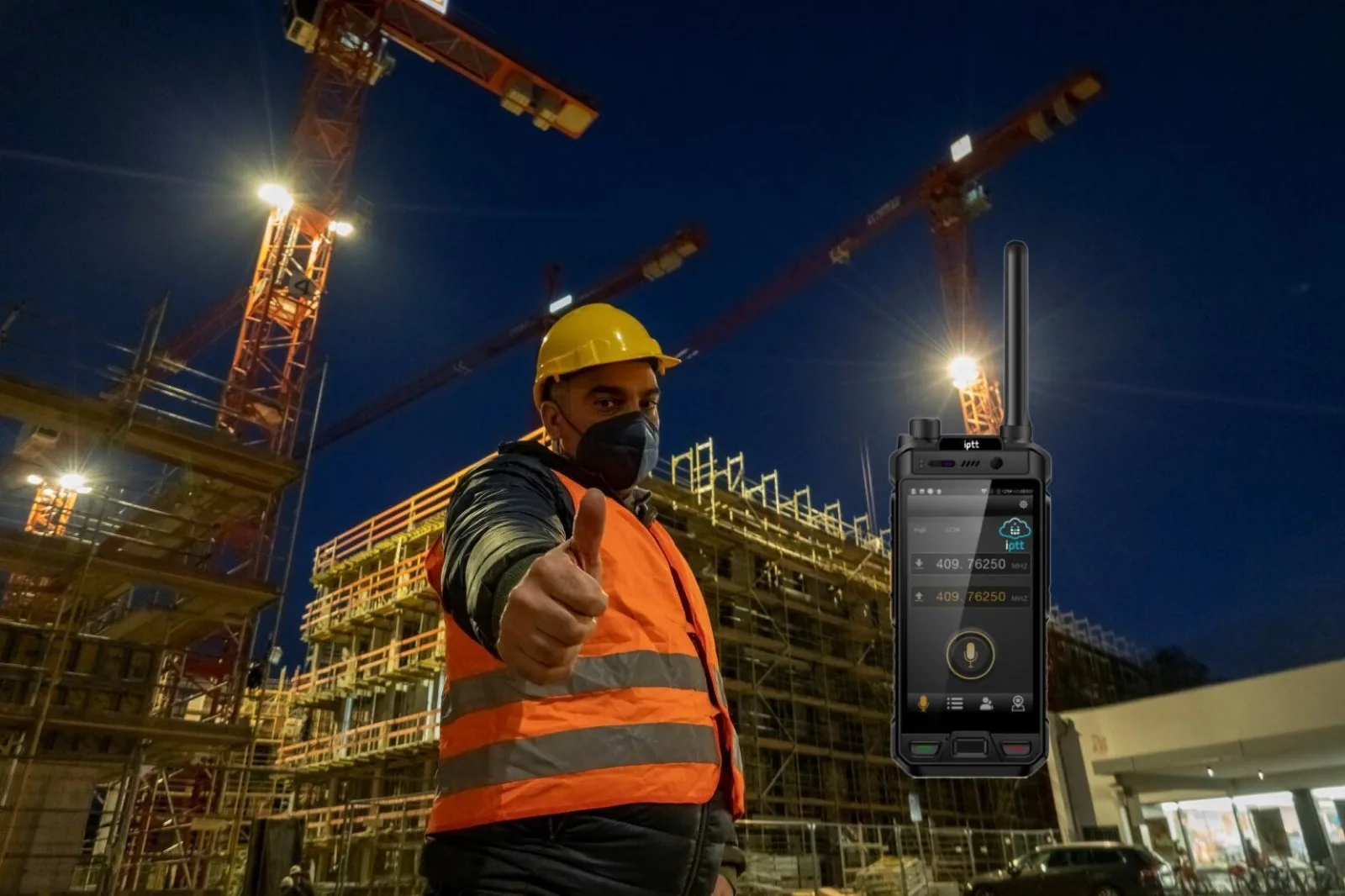
Modern site radios do more than transmit voice. Many systems now include safety features designed to protect workers and support site management.
Emergency alert buttons allow workers to raise an alarm instantly. Lone worker monitoring helps track staff working in isolated areas. GPS location data enables supervisors to respond more effectively if someone needs assistance.
These features support wider health and safety responsibilities, particularly on large sites. Clear communication combined with location awareness can significantly improve response times during incidents.
HEALTH & SAFETY
The Health and Safety Executive's construction guidance outlines communication as a core element of site safety planning. Having reliable, instant communication across all workers — including those working alone or at height — is fundamental to meeting HSE expectations on UK building sites.
Costs and Scalability for Construction Projects
When assessing site radios, it is important to consider long-term costs rather than just the initial purchase. Traditional radios may appear cost-effective upfront but infrastructure, licensing and maintenance can increase expenses over time.
PoC radios typically operate on a subscription model that covers connectivity, software and support. While this introduces an ongoing cost, it simplifies budgeting and allows organisations to scale communication up or down as projects change.
For construction firms with fluctuating team sizes or temporary sites, PoC systems can provide greater flexibility without the need to invest in permanent infrastructure.
Which Site Radio Solution Is Right for Your Project?
Traditional two-way radios remain suitable for smaller sites with limited range requirements and simple communication needs. They are reliable, familiar and effective in contained environments.
PoC radios are better suited to larger projects, multi-site operations and teams that require modern features such as GPS tracking, central management and extended coverage.
Choosing the right solution depends on site size, duration, safety requirements and how teams are deployed across the project. Consider these factors:
- Site size and complexity — single contained site or multiple buildings and locations
- Project duration — short temporary deployment or long-term ongoing operations
- Team mobility — fixed positions or workers moving across large areas
- Safety requirements — lone worker protection, emergency alerts and GPS tracking needs
- Scalability — how quickly team sizes change as the project grows
Final Thoughts on Construction Site Radios
Site radios play a vital role in keeping UK construction projects safe, efficient and well coordinated. Whether using traditional two-way radios or modern PoC systems, the goal remains the same — to provide instant and reliable communication across the entire team.
For organisations looking for greater coverage, flexibility and modern safety features, PoC radios offer a practical and future-ready solution. Understanding the differences between these systems helps ensure your communication setup supports both productivity and worker safety.
Frequently Asked Questions About Construction Site Radios
What are site radios used for on construction sites?
Site radios are used to coordinate teams, manage vehicle movements, report hazards and respond quickly to incidents. They provide instant communication without relying on phone calls, making them a practical tool throughout the working day.
Do construction site radios work without mobile signal?
Traditional two-way radios do not require mobile signals. PoC radios do rely on mobile networks, although multi-network SIMs can help maintain coverage by switching between the strongest available networks automatically.
Are PoC radios suitable for construction use?
Yes. PoC radios are widely used in construction due to their wide coverage, clear audio and additional safety features such as GPS tracking and emergency alerts. They are particularly well suited to large or multi-site projects.
Which type of radio is best for large construction sites?
For large or multi-site projects, PoC radios are often more suitable due to their extended range, central management and ability to scale as projects change. Traditional radios remain a practical option for smaller, contained sites with limited communication needs.
Related Reading
- Best Security Communication Devices for UK Security Teams
- PoC Radios vs Traditional Two-Way Radios: Which Is Right for UK Organisations?
- How Do Push-to-Talk over Cellular Radios Work?
- Multi-Network SIM Cards — iPTT
- Health and Safety Executive — Construction Safety Guidance
- Ofcom — Business Radio Licensing
Thank you for reading. Explore our full news and insights section for more articles on professional radio communication.