How Do Walkie-Talkies Work? The Surprising Tech Behind Simple Radios!
Discover the fascinating technology behind walkie-talkies and why they remain essential for reliable communication
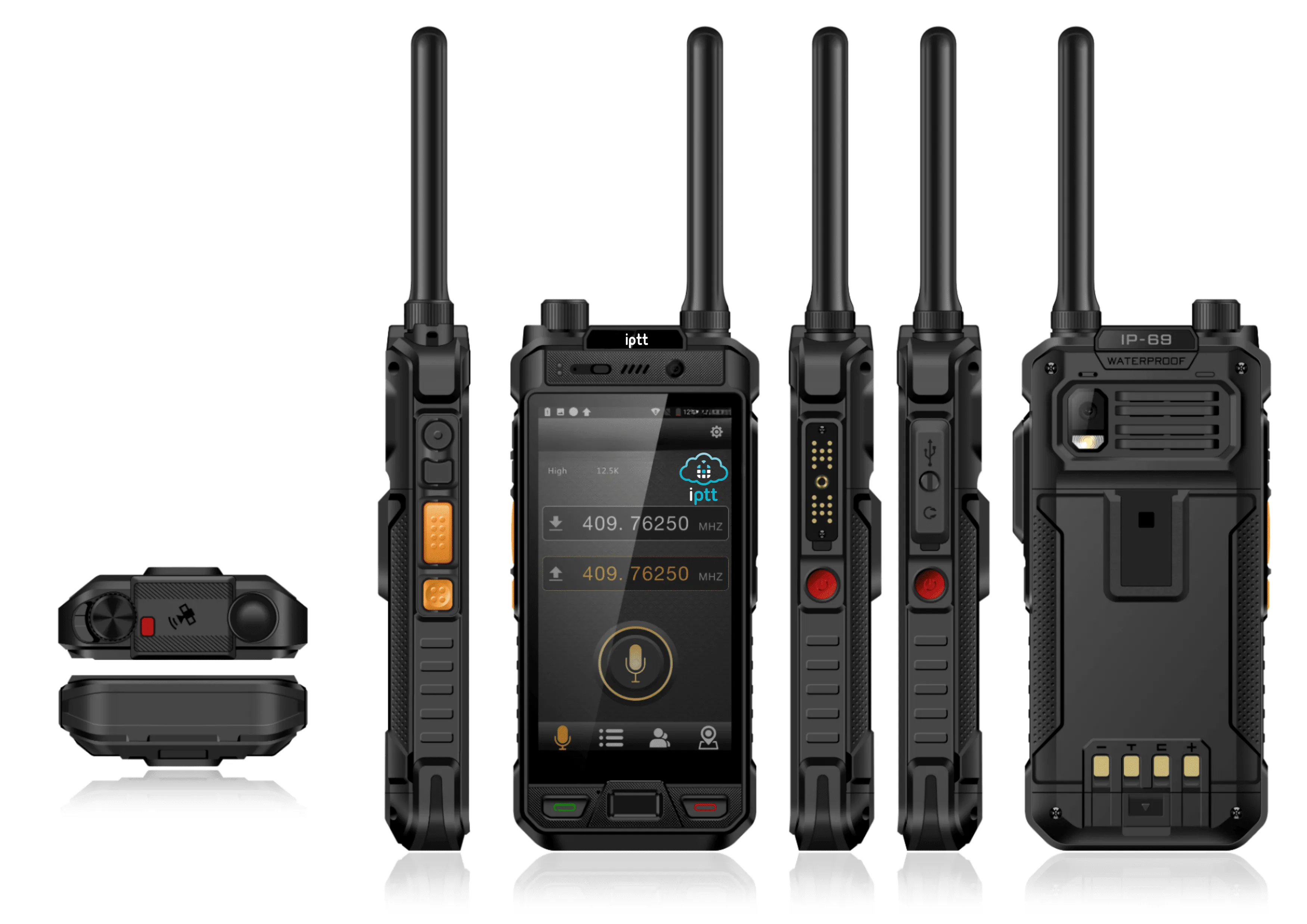
A walkie-talkie is still the easiest, most reliable, and fastest communication technology among two-way communication devices. Events, security, construction, emergency rescue—walkie-talkies are used everywhere.
Our UK-based online service center, iPTT, makes it easy for users to use a variety of PoC radios, walkie-talkies, and long-range communication solutions.
Now the main question: how do walkie-talkies work? Let's know step by step, in simple language.
What Is a Walkie-Talkie and Why Is It Called a Two-Way Radio?
A walkie-talkie is a device that allows you to talk directly to each other. It is called a two-way radio because both parties can send and receive messages.
Walkie-talkies use Half Duplex technology, not Full Duplex—meaning one person speaks and the other listens at the same time. Unlike a telephone, two people cannot talk at the same time. It is important to understand this technology because it is directly related to how walkie-talkies function.
How Do Walkie-Talkies Work? A Simple Step-By-Step Breakdown
A walkie-talkie operates based on radio waves, frequencies, channels, and transmission. Here's how it works:
When you press the Push-to-Talk (PTT) button:
- Your voice is sent to the transmitter and converted into radio waves
- This wave is transmitted at a specific frequency
- The receiver on the other walkie-talkie receives the wave and converts it back into audio
That is the whole system. If you understand this explanation, you've grasped the fundamental concept of how walkie-talkies work.
The Technology Inside a Walkie-Talkie (Explained Clearly)
There are three major systems within a walkie-talkie that make everything work:
1. Radio Waves (UHF vs VHF)
Walkie-talkies typically use Ultra High Frequency (UHF) or Very High Frequency (VHF) radio bands.
- UHF works effectively inside buildings and urban environments
- VHF provides good distance in open spaces and rural areas
Understanding these frequency bands helps you choose the right walkie-talkie for your specific needs. For more information on UK radio regulations, visit Ofcom's radio licensing page.
2. Modulation (FM/AM)
Frequency Modulation (FM) helps maintain clear sound and reduces noise. This feature contributes to the effectiveness of long-range walkie-talkies.
FM modulation ensures that your messages come through clearly, even in challenging environments with interference or background noise.
3. Antenna, Transmitter & Receiver System
The three core components work together:
- The antenna is responsible for sending the signal
- The transmitter converts the sound into radio waves
- The receiver converts the radio waves back into sound
This entire system is the basis of how walkie-talkies work. Each component plays a crucial role in ensuring reliable communication.
Analog vs Digital vs PoC — Which One Is Best in 2025?
There are three main types of walkie-talkies available today, each with distinct advantages:
Analog
Cheaper and easier to use, but with less range and limited features. Best for simple, local communication needs.
Digital
Offers clearer sound and encryption for secure communication. Better audio quality and privacy protection.
PoC (Push-to-Talk over Cellular)
Runs on 4G/5G networks, providing unlimited range. iPTT UK offers the most realistic solution in this category.
What Is the Real Range of a Walkie-Talkie?
The range depends on real-world factors like line-of-sight, buildings, weather, terrain, antenna power, and environmental obstacles.
Typically, a fixed range of 1-5 km is achievable with traditional walkie-talkies. However, long-range walkie-talkies advertised as 50 miles in the UK do not actually reach that far in real-world conditions.
The "real solution" for long-range communication is PoC radios, which use 4G/5G and the internet to provide "unlimited range." This makes them ideal for nationwide or even international communication needs.
How Walkie-Talkies Work Safely (Security & Encryption)
Safety and security are crucial when using walkie-talkies. Here are three important aspects:
1. Channel Privacy
Public frequencies can be intercepted by other people's signals. Always use private channels when discussing sensitive information.
2. Digital Encryption
Digital and PoC devices are encrypted, ensuring high security for your communications. This is essential for professional and sensitive operations.
3. Interference Protection
Modern chipsets are designed to block unwanted signals, ensuring clear and reliable communication. PoC radios with iPTT offer these benefits in a more advanced way.
Where Walkie-Talkies Are Commonly Used
Both traditional walkie-talkies and PoC are used across various industries and applications:
- Security teams — For patrol coordination and incident response
- Event management — Coordinating staff and volunteers at large gatherings
- Schools and hospitals — Internal communication and emergency response
- Construction sites — Site-wide coordination and safety communication
- Logistics — Warehouse and delivery coordination
- Emergency rescue and first responders — Critical communication during emergencies
The versatility of walkie-talkies makes them essential tools in any environment where instant, reliable communication is needed.
Traditional Walkie-Talkie vs PoC — Which Should You Choose?
The choice between traditional walkie-talkies and PoC depends on your specific needs:
For local communication within 1-5 km: Traditional walkie-talkies are sufficient and cost-effective.
For nationwide or worldwide communication: PoC radios are recommended as "the best" solution.
Many organizations in the UK are now choosing iPTT (which is a type of PoC) due to several benefits:
- Crystal-clear audio — Superior sound quality
- Unlimited range — Communicate anywhere with network coverage
- Multi-channel — Multiple talk groups for different teams
- GPS tracking — Real-time location monitoring
- UK-based online support — Professional assistance when you need it
Why UK Organisations Prefer iPTT for Professional Communication
iPTT offers comprehensive communication solutions that go beyond just hardware:
- Radio and PoC hardware — Professional-grade devices built for reliability
- Software platform — Advanced dispatch and management systems
- SIM management — Multi-network connectivity for maximum coverage
- Device configuration — Ready-to-deploy communication systems
- After-sales support — Ongoing assistance and maintenance
With iPTT, you get a complete, ready-to-deploy communication system backed by expert UK support. Learn more about our communication solutions.
FAQ: How Do Walkie-Talkies Work?
Do walkie-talkies work without a mobile network?
Yes, traditional walkie-talkies operate on radio signals and don't require a mobile network. However, PoC (Push-to-Talk over Cellular) radios use 4G/5G networks for unlimited range and enhanced features.
What is the range of a walkie-talkie?
Typical walkie-talkies cover 1–5 km depending on terrain, buildings, and weather conditions. For unlimited range, PoC radios using 4G/5G networks are the best solution.
Does a walkie-talkie work with WiFi?
PoC radios can use WiFi for connectivity, providing flexibility in communication options beyond traditional radio frequencies. This makes them ideal for indoor environments with strong WiFi coverage.
Does PoC work in all countries?
PoC works worldwide wherever there is internet connectivity, making it ideal for international communication needs. This is one of the key advantages over traditional radio systems.
How does iPTT support communication?
iPTT supports communication with servers, SIMs, apps, and professional hardware. We provide end-to-end solutions including infrastructure, devices, and ongoing support to ensure reliable communication for your organization.
Conclusion
While the technology of the walkie-talkie is simple, its functionality is extremely powerful. Whether local or international, walkie-talkie and PoC radios are still essential for communication today.
If you want a reliable, secure, and professional long-range communication solution, iPTT is the best place for you. Contact us today to discuss your communication needs and discover how we can help your organization stay connected.
Need Professional Communication Solutions?
Contact iPTT to learn how our walkie-talkies and PoC radio systems can help your organization stay connected with reliable, secure communication.