Radio Dispatch Console Systems in the UK
How control rooms keep field teams coordinated in real time — and what to weigh up before choosing a system

When communication breaks down, coordination breaks down with it.
On a busy construction site, a missed message can delay a crane lift. In a security control room, unclear communication can slow the response to an unfolding incident. For organisations operating across multiple teams or locations, structured communication isn’t just helpful — it’s critical.
Radio dispatch console systems provide that structure. Used across commercial operations throughout the UK, they let control rooms monitor, manage and coordinate field teams in real time, bringing visibility and order to complex environments.
What Is a Radio Dispatch Console System?
A radio dispatch console system is a central communication platform operated from a control room or operations centre. It connects directly to field radios or Push to Talk over Cellular devices, letting a dispatcher reach individuals or entire groups instantly.
Unlike basic peer-to-peer radio use, a dispatch console adds hierarchy and oversight. Supervisors can monitor activity, manage talk groups, send broadcast messages and respond to incidents from a single interface.
In commercial environments, this delivers a level of structured control that standard handheld radios alone can’t offer.
How Dispatch Radio Systems Work in Practice
In a typical setup, field personnel carry either licensed two-way radios or PoC devices configured within defined groups. These devices work as normal for direct communication between team members.
At the same time, a supervisor operates from a console interface, usually desktop-based. From this position, the dispatcher can:
| Dispatcher capability | What it enables |
|---|---|
| Initiate calls to specific users | Direct, one-to-one contact without disrupting the wider group |
| Broadcast instructions to entire groups | Fast, consistent messaging across a whole team or site |
| Monitor active communication channels | Real-time visibility into who’s talking to whom |
| View live GPS locations (where enabled) | Faster resource allocation and incident response |
This creates a central coordination point. Communication flows in both directions — staff report into control, and control directs them in real time.
Key insight
Structured dispatch communication reduces confusion in high-pressure environments by clearly defining who speaks, who listens and who manages.
Industries That Rely on Radio Dispatch Consoles
Radio dispatch console systems are widely used across UK industries where oversight and coordination are essential.
Construction and Infrastructure Projects
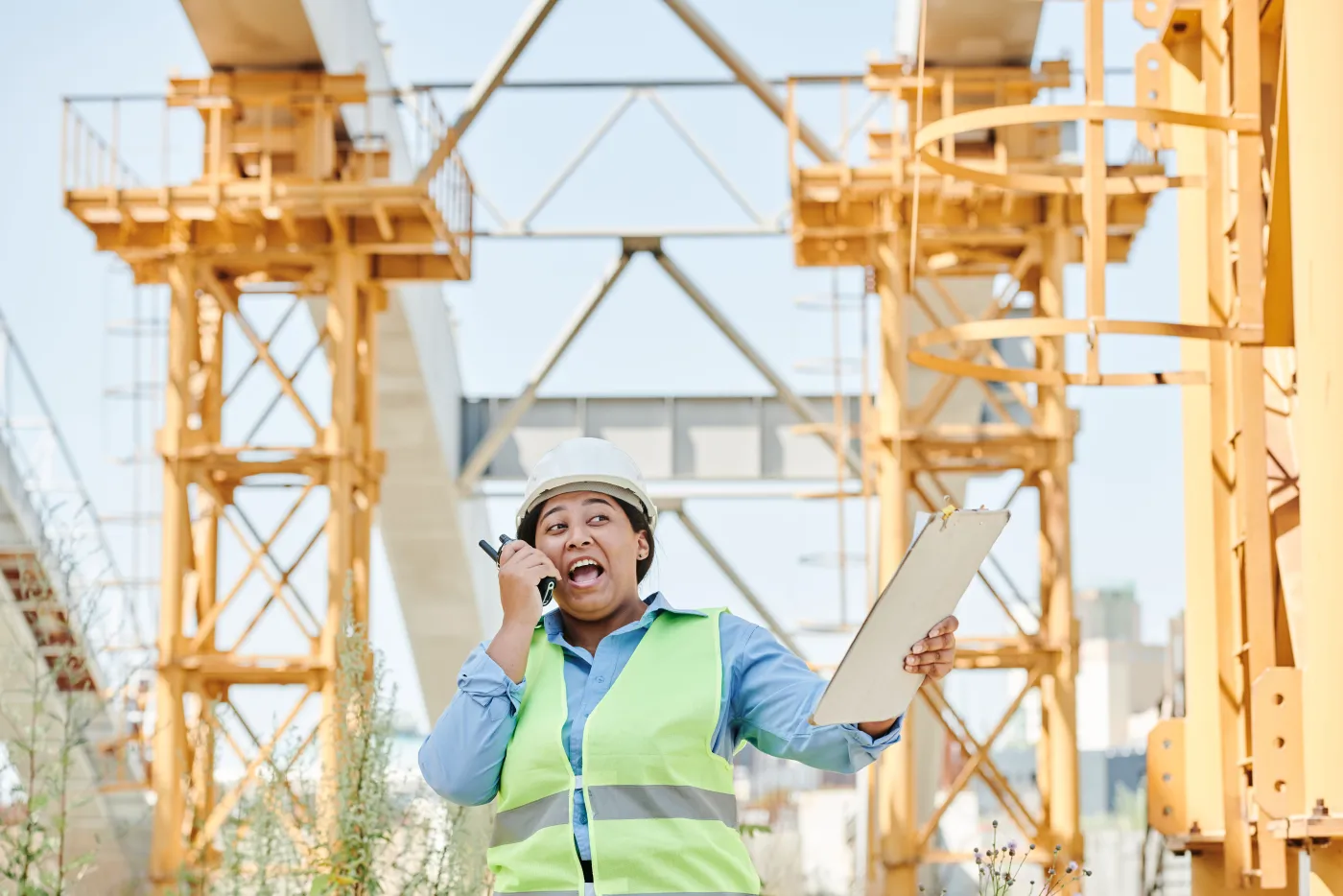
On large construction sites, teams often operate across multiple areas, levels or compounds, and supervisors can’t physically oversee everything at once. A dispatch console enables central coordination, rapid response to safety concerns and clear management of site logistics.
Effective communication and supervision sit within the wider site safety obligations set out by the Health and Safety Executive, including the coordination duties under CDM 2015. Structured radio systems support those obligations by keeping workers connected and letting incidents be escalated without delay.
Security and Patrol Services
Security companies frequently run dedicated control rooms overseeing static guards, mobile patrols and event deployments. Dispatch consoles let controllers monitor activity, redirect resources and coordinate incident response.
This central visibility improves accountability and response times.
Logistics and Transport Operations
Fleet managers rely on dispatch systems to stay in contact with drivers, manage route changes and monitor operational status across regions. Real-time communication allows faster adaptation to delays, incidents or urgent client requests.
Events and Temporary Operations
Large events often set up a command centre responsible for security, stewarding and logistics. A dispatch console lets that command centre manage communication clearly, particularly when teams are spread across complex venues.
Dispatch Consoles vs Basic Two-Way Radio Use
Traditional two-way radios enable instant voice communication between users. For small teams working in a confined space, that may be entirely sufficient.
As operations grow, though, so does complexity. Without central oversight, communication can become fragmented — messages may not reach the right group, and supervisors can lose visibility of how teams are interacting.
A dispatch console introduces structure. It lets communication be directed, monitored and, where necessary, logged — enhancing radios rather than replacing them, within a coordinated framework.

Radio Dispatch Consoles and Push to Talk over Cellular
Many modern dispatch platforms integrate with Push to Talk over Cellular systems. In this model, field devices communicate over 4G or 5G mobile networks, while dispatchers manage communication through a secure, cloud-based interface.
This gives broader geographic coverage than traditional site-based radio infrastructure. For organisations operating across multiple sites or regions, it enables central coordination without complex repeater installations.
A practical note for UK deployments: PoC devices operate over commercial mobile networks rather than dedicated radio spectrum, so they typically sit outside the Ofcom radio licensing requirements that apply to conventional two-way radio kit — though it’s worth confirming with your provider for your specific setup.
Coverage should still be assessed carefully in areas like basements, plant rooms or underground sections of a site, where mobile signal can drop out; a multi-carrier SIM or Wi-Fi calling backup helps reduce that risk.
PoC dispatch systems are built specifically for commercial and operational environments. They provide structured group communication, GPS visibility and scalable tools, while remaining entirely separate from emergency service infrastructure (such as TETRA).
For growing organisations, this combination of flexibility and oversight is genuinely useful.
What Organisations Should Consider When Choosing a Dispatch System
Selecting a radio dispatch console system calls for a practical assessment rather than a focus on features alone.
| Consideration | Why it matters |
|---|---|
| Size and distribution of the workforce | Determines how many users and talk groups the system needs to support |
| Single-site vs multi-site operations | Shapes whether PoC, traditional radio, or a hybrid setup fits best |
| Coverage reliability in all working environments | Avoids blind spots indoors, underground or in remote areas |
| Level of supervisory oversight required | Defines how much monitoring, logging and control the console needs |
| Scalability as the organisation grows | Ensures the system can expand without a hardware overhaul |
The right system should match real operational demands, not theoretical specifications.
Scalability advantage
Modern dispatch platforms let new users be added through software rather than hardware expansion — well suited to organisations with seasonal staffing or growth plans.
Conclusion
Radio dispatch console systems play a vital role in communication for UK organisations working in construction, security, logistics and events.
By introducing central oversight and coordinated control, they improve clarity, responsiveness and efficiency.
Basic two-way radios remain effective for small teams, but larger or more complex operations benefit from the added structure dispatch consoles provide. Combined with modern Push to Talk over Cellular solutions, these systems offer nationwide coverage and scalable communication suited to commercial needs.
Frequently Asked Questions
What is a radio dispatch console system?
A radio dispatch console system is a centralised communication platform used in a control room or operations centre. It connects to field radios or Push to Talk over Cellular devices, letting supervisors manage communication, monitor activity and coordinate teams in real time.
How does a dispatch radio system differ from a standard two-way radio?
A standard two-way radio allows direct communication between users within a channel or group. A dispatch radio system adds central oversight, letting a control room initiate calls, manage talk groups, monitor communication flow and, where enabled, track user locations.
Can a dispatch console work with Push to Talk over Cellular?
Yes. Many modern dispatch platforms integrate with Push to Talk over Cellular systems, letting field devices operate over 4G or 5G mobile networks while dispatchers manage communication through a secure desktop interface.
Do dispatch radio systems improve safety?
Dispatch systems support clearer escalation procedures and faster incident response by giving control rooms central visibility over team activity. In higher-risk environments, this can meaningfully improve operational safety.
Ready to Tighten Up Your Team’s Coordination?
If your organisation is reviewing how it coordinates field teams and control room operations, book a short call with iPTT to talk through solutions built for professional environments.