Ambulance Radios UK – Why Reliable Communication Matters
Discover how UK ambulance teams rely on digital radios for fast, secure communication — and how PoC technology bridges the gap for private medical and events teams
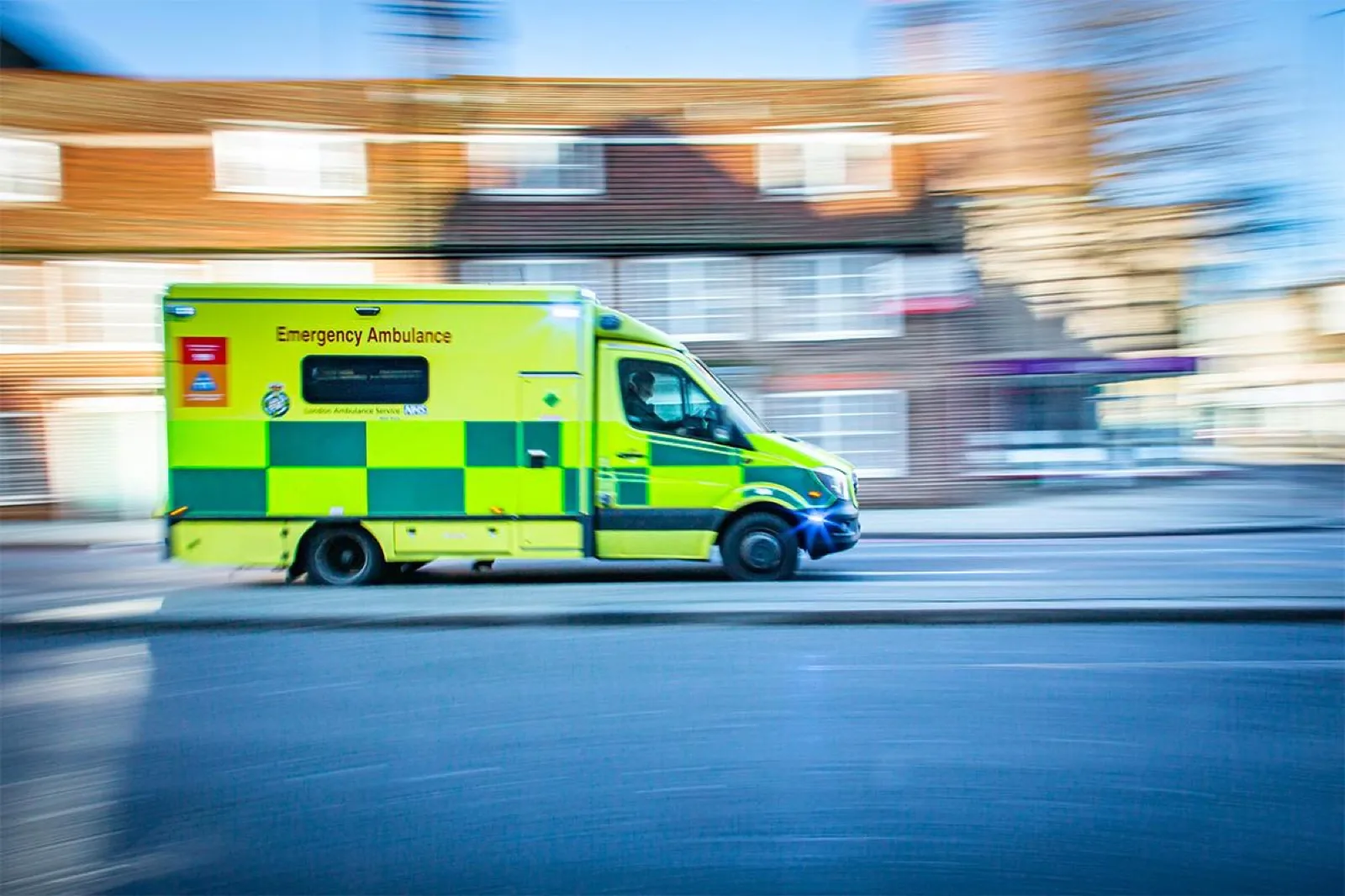
Every second counts in emergency medicine. When a paramedic is on scene managing a cardiac arrest, or a crew is racing to a road collision, the quality of their radio communication can be the difference between life and death. This guide breaks down exactly how UK ambulance radio systems work, why digital technology has transformed emergency response, and what communication options are available to private medical teams who operate outside the NHS.
How UK Ambulance Services Communicate
Ambulance services across England, Wales and Scotland do not use ordinary radio frequencies. They operate on the Airwave Network, a purpose-built, closed digital system developed exclusively for the emergency services. It runs on TETRA (Terrestrial Trunked Radio) technology, a standard designed specifically for high-pressure, mission-critical environments.
Think of TETRA like a private motorway that only emergency vehicles can use. While public mobile networks can get congested during a festival, a major incident or a network outage, TETRA keeps running because it has its own dedicated infrastructure, completely separate from consumer services.
KEY FACT
The UK Airwave Network provides coverage to over 50,000 square miles and connects all three blue-light services — ambulance, police and fire.
What Makes TETRA Different
TETRA is not simply a better version of a walkie-talkie. It was engineered from the ground up for emergency use, which is why it delivers capabilities that no commercial radio system can match:
- End-to-end encryption on every call, protecting sensitive patient data in transit
- Strong indoor penetration — critical when crews work inside hospitals, multi-storey car parks or large buildings
- Structured talk groups that let control rooms manage multiple incident channels simultaneously
- Emergency alert buttons that instantly notify dispatch if a crew member is in danger
- Direct mode operation, allowing radio-to-radio communication even without network coverage
The Journey of a Single Emergency Call
To understand why radio reliability matters so much, it helps to trace what actually happens from the moment a 999 call is received to the moment a patient arrives at hospital.
When a call comes in, the incident is logged, triaged and dispatched within seconds. The responding crew receives the location, incident category and any risk flags — such as a violent patient or hazardous materials — directly through their radio before they have even started the engine. As they travel, control rooms can update them in real time, redirect them to a more critical case, or request additional units.
On scene, communication does not stop. Paramedics relay clinical observations back to dispatch, request specialist backup if needed, or alert the receiving hospital. For time-sensitive conditions like stroke or major trauma, this pre-alert can mean a specialist team is scrubbed and ready the moment the patient comes through the door, often shaving critical minutes off treatment time.
WHY IT MATTERS
For stroke patients, every 15-minute reduction in treatment time reduces the risk of death or disability by up to 4%. Pre-hospital radio communication directly enables these time savings.
From Analogue to Digital: Why the Upgrade Changed Everything
For decades, UK ambulance services used analogue radio systems. They were simple and familiar, but they had serious limitations that became harder to ignore as emergency medicine grew more complex.
Analogue radio suffered from audio interference in crowded radio environments, patchy coverage inside modern buildings, and no encryption whatsoever. Conversations could in theory be intercepted by anyone with the right scanner. For a service handling sensitive patient information daily, this was a genuine governance risk.
The move to digital TETRA radios resolved all of these issues in one transition. Audio quality improved dramatically. Encryption became standard. Coverage in difficult environments became more consistent. And new features — such as emergency alerts, GPS tracking and structured talk groups — gave control rooms tools that simply did not exist with analogue technology.
The result has been measurably better coordination, faster response and safer conditions for crews working in unpredictable environments.
The Technology That Powers Modern Ambulance Radios
Several layers of technology work together to make ambulance communication as reliable as it is.
TETRA and the Airwave Network
TETRA provides low-latency digital voice communication designed to maintain clarity even under heavy traffic. The Airwave network infrastructure is built with resilience in mind — base stations operate independently, so if one fails, others take over. The system also continues functioning during power failures thanks to backup power systems built into the infrastructure.
GPS and Fleet Tracking
Most modern ambulance radios include integrated GPS. This allows control rooms to see the real-time location of every unit, allocate the nearest available resource automatically and respond immediately if a crew presses their emergency alert. During major incidents, GPS data also helps incident commanders manage resource positioning across a wide area.
The Emergency Services Network (ESN)
The UK is currently preparing a major transition from Airwave to the Emergency Services Network, a 4G/5G-based system that will eventually replace TETRA infrastructure. ESN is designed to add richer data capabilities — including video, enhanced messaging and deeper integration with NHS clinical systems — while maintaining the security and reliability that emergency services depend on.
LOOKING AHEAD
The ESN transition is managed by the Home Office and is expected to deliver enhanced broadband data capability to all three emergency services once fully deployed.
Why Private Ambulance and Medical Teams Need a Different Solution
The Airwave system is exceptional — but it is not open to everyone. Access is restricted to regulated blue-light emergency services. Private ambulance providers, event medical teams, patient transport companies and voluntary first responders cannot join the network, regardless of how professional or safety-critical their operations are.
This creates a real communication gap. Many of these organisations are operating in exactly the same environments: busy venues, remote locations, urban streets where reliable radio communication is just as important. Traditional TETRA equipment is also expensive to procure and complex to manage, making it impractical even for well-funded private operations.
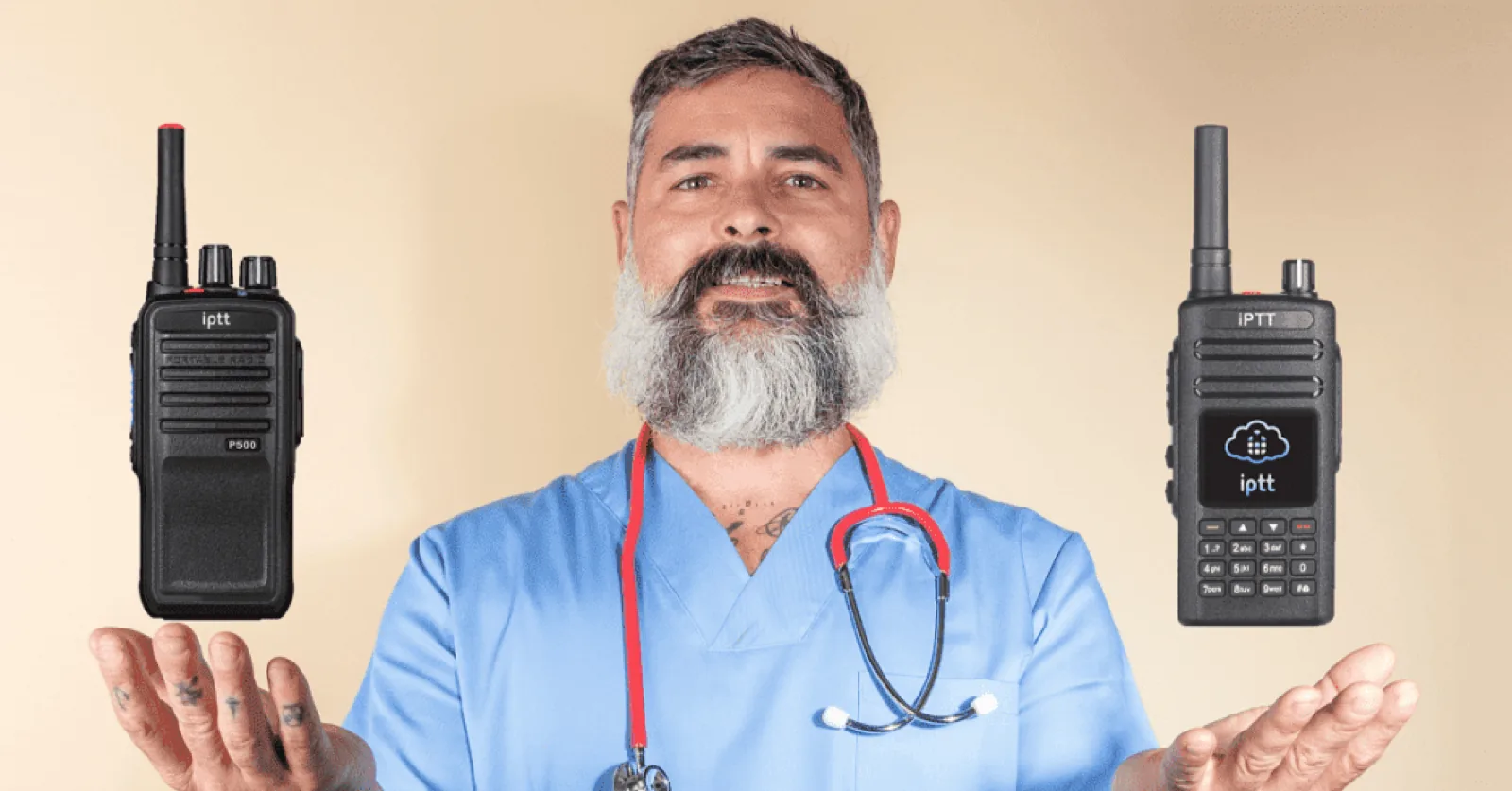
Push to Talk over Cellular: The Modern Alternative
Push to Talk over Cellular (PoC) has emerged as the most practical communication solution for non-NHS medical teams. Rather than relying on dedicated spectrum, PoC uses 4G and 5G mobile networks to deliver radio-style, push-to-talk communication across any coverage area.
The key advantage is flexibility. PoC works on rugged dedicated devices, standard smartphones and tablets. It requires no specialist infrastructure to set up and can be deployed quickly for a one-day event or configured as a permanent nationwide communication system.
What PoC Delivers for Medical Teams
- Nationwide coverage through multi-network SIM cards that switch automatically between carriers for best signal
- Instant push-to-talk voice communication with sub-second latency
- Real-time GPS tracking visible through dispatcher software
- Group calling, individual calling and emergency alert functionality
- Support for image and video sharing where clinical documentation requires it
- Compatibility with existing smartphones, removing the need for specialist hardware
PoC is not a replacement for TETRA in NHS ambulance trusts. It is, however, a serious and reliable alternative for the many medical teams who cannot access Airwave and need professional-grade communication at a realistic cost.
How iPTT Supports Private Medical and Ambulance Teams
iPTT provides complete PoC communication solutions built for the demands of medical and emergency response work. The product range includes:
- Rugged PoC radio devices rated for tough operational environments. Browse our full device range.
- Multi-network SIM cards that maintain coverage across the UK. See our SIM options.
- Advanced dispatcher software that gives control rooms live visibility of all units
- Full compatibility with smartphones and tablets for organisations that prefer a BYOD approach
Private ambulance providers, event medical teams, patient transport services and local authority emergency planning teams can all build a communication setup through iPTT that mirrors the functionality of professional emergency radio — with the added flexibility of modern digital networks.
Final Word
Ambulance radio systems are not a background detail — they are an active clinical tool that shapes patient outcomes every day. The move from analogue to digital transformed what was possible. The coming shift to the Emergency Services Network will take it further again.
For the thousands of medical professionals who operate outside the NHS, Push to Talk over Cellular provides the same fundamental capability: instant, reliable, nationwide communication that keeps teams connected when it matters most.
If your organisation needs professional communication that works as hard as your team does, speak to iPTT about PoC radios, multi-network SIMs and dispatcher tools built for medical and emergency response environments.
Frequently Asked Questions
What radio system do UK ambulance services use?
NHS ambulance services use TETRA radios on the Airwave Network — the same system used by police and fire services. It is a closed, encrypted digital network restricted to regulated emergency services.
Are ambulance radio communications encrypted?
Yes. All communication on the Airwave Network is fully encrypted as standard, protecting patient information and ensuring conversations cannot be intercepted.
Can private ambulance companies use the Airwave Network?
No. Airwave access is restricted to regulated blue-light services. Private providers typically use DMR systems or Push to Talk over Cellular solutions as alternatives.
Why do ambulance radios work well inside buildings?
TETRA was engineered specifically for indoor penetration and performs reliably in environments like hospital corridors, underground car parks and dense urban buildings where standard radio often fails.
What is the Emergency Services Network and when is it coming?
The ESN is the UK government's programme to replace the Airwave Network with a 4G/5G-based system. It is managed by the Home Office and will eventually add broadband data capability — including video and richer messaging — for all three emergency services.
Related Reading
Thank you for reading. Explore our full news and insights section for more articles on professional radio communication.