Police Radios UK: What Technology Powers Modern Law Enforcement Communication
Discover how UK police radios work, the TETRA and Airwave technology behind them, and how PoC radio serves non-emergency users
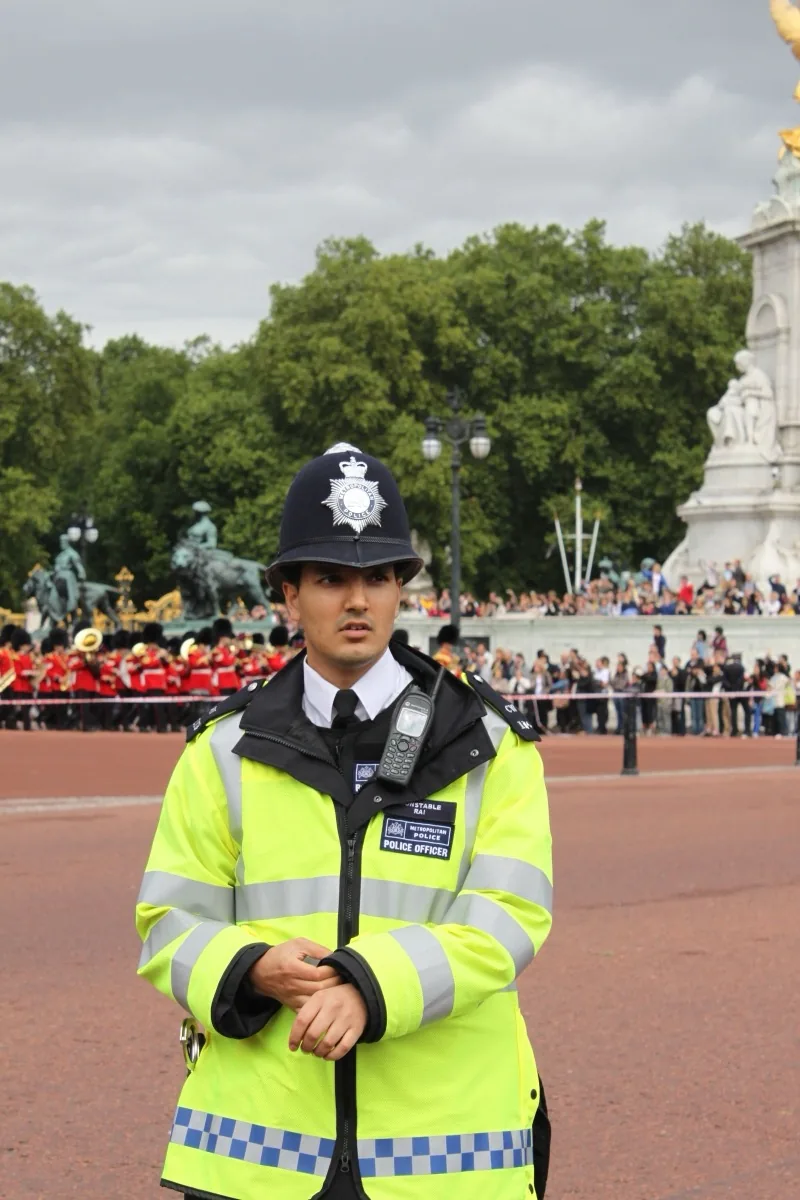
When you see a police officer on patrol, there's one piece of equipment you'll almost always notice clipped to their vest or belt — a radio. But have you ever wondered what's actually inside that device, how it works, and why it's so different from the walkie-talkies you can buy at a consumer electronics store?
UK police radios are part of a sophisticated, purpose-built communications infrastructure that's been decades in the making. Understanding how that system works — and where it's heading — also helps explain why many businesses and organisations are turning to PoC (Push-to-Talk over Cellular) radio solutions like those offered by iPTT for their own professional communication needs.
What Are Police Radios in the UK?
Police radios in the UK are not standard consumer devices. They are purpose-built professional radios operating on a dedicated, secure, nationwide network reserved exclusively for emergency services and authorised government agencies.
The current system — known as Airwave — has been the backbone of UK emergency services communication since the early 2000s. It replaced a patchwork of older analogue systems that were inconsistent, insecure, and unreliable across force boundaries.
Today, Airwave serves over 300,000 users across police forces, fire services, ambulance trusts, and other blue-light organisations throughout England, Scotland, and Wales.
How UK Police Radio Systems Work
The Airwave network is built on TETRA (Terrestrial Trunked Radio) technology. Here's how a typical transmission works from start to finish:
- An officer presses the PTT (Push-to-Talk) button on their Airwave handset
- The handset digitises and compresses the voice signal
- The signal is encrypted using strong cryptographic algorithms
- The encrypted data is transmitted to the nearest TETRA base station
- The base station routes the call through the Airwave core network
- The intended recipient's handset decrypts and plays back the audio
- The entire process happens in under a second
This process happens seamlessly even as officers move between coverage zones, cross force boundaries, or operate in challenging urban and rural environments.
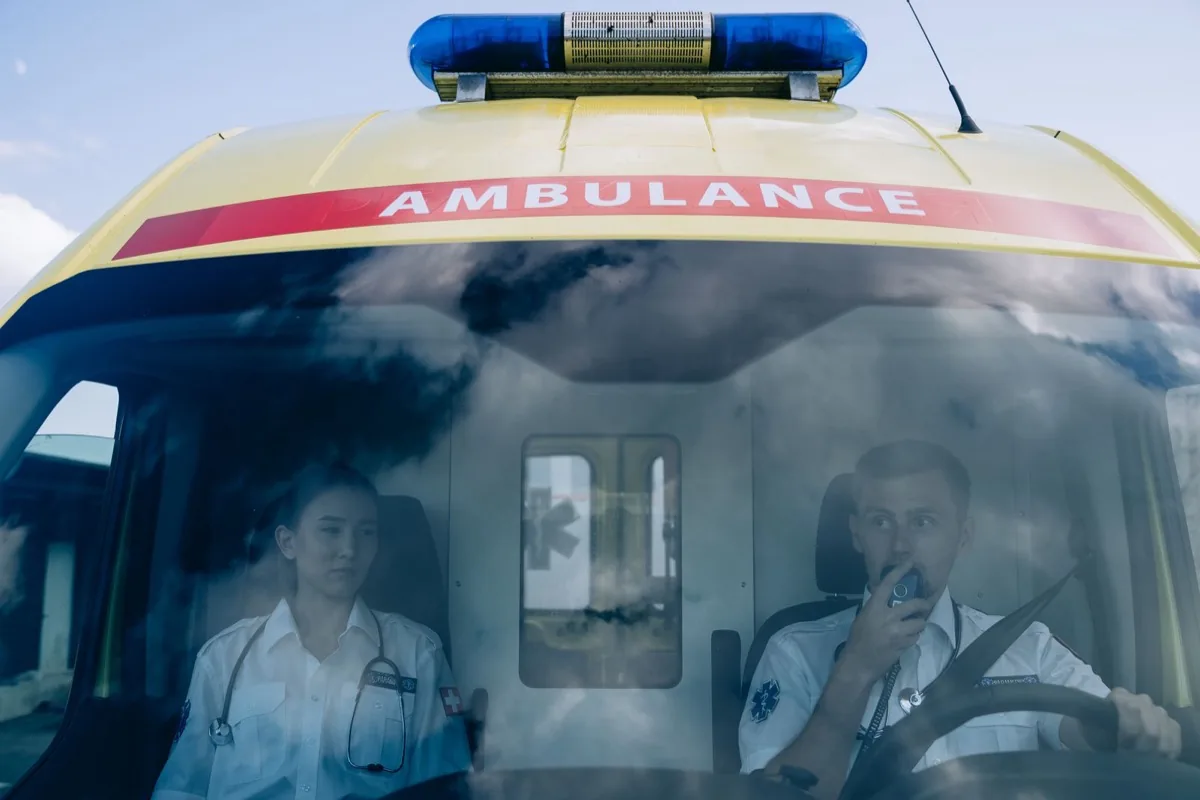
From Analogue to Digital: Why the Switch Mattered
Before the Airwave network, UK police forces operated on a mix of analogue VHF and UHF radio systems. These worked reasonably well within individual force areas, but they came with serious limitations:
- No encryption — conversations could be intercepted with a basic scanner
- Incompatible systems — officers from different forces couldn't easily communicate at major incidents
- Limited coverage — rural and underground locations often had no signal
- No data capability — radios could only carry voice, not information
- Congestion — busy channels during major incidents caused communication failures
The 1999 Macpherson Report and the lessons learned from major incidents like the Hillsborough disaster and the Manchester bombing made it clear that emergency services needed a unified, secure, digital communications platform.
Airwave, rolling out from 2001, solved all of these problems — bringing consistent nationwide coverage, end-to-end encryption, interoperability between services, and the ability to carry data alongside voice.
What Technology Powers Police Radios Today?
The TETRA standard that underpins Airwave includes several features that make it ideal for mission-critical communications:
TETRA (Terrestrial Trunked Radio)
TETRA is a digital standard developed specifically for professional mobile radio (PMR) users. Unlike commercial mobile networks designed for data-heavy consumer use, TETRA is optimised for reliable, instant voice communication with robust coverage — even in tunnels, underground stations, and remote areas.
It uses time-division multiple access (TDMA) technology, which allows multiple users to share the same radio channel efficiently without interfering with each other.
End-to-End Encryption
All Airwave communications are end-to-end encrypted, meaning the audio is scrambled at the handset level and can only be decrypted by authorised devices. This prevents interception even if someone gains access to the network infrastructure.
For a deeper look at how police radio encryption works, see our dedicated article on encryption and security in police radios.
Direct Mode Operation (DMO)
TETRA supports Direct Mode Operation, which allows two or more handsets to communicate directly with each other without going through any base station infrastructure. This is critical for situations where officers are in buildings, tunnels, or remote areas where network coverage may be limited or unavailable.
GPS and Location Tracking
Modern Airwave handsets include integrated GPS, allowing control rooms to track officer locations in real time. This supports officer safety, resource deployment, and incident management — capabilities that were simply impossible with analogue radio.
Data and Status Messaging
Beyond voice, TETRA can carry short data messages, status updates, and PNC (Police National Computer) queries — giving officers access to critical information in the field without needing a separate device.
The Emergency Services Network (ESN): What Comes Next?
The UK government has been developing a successor to Airwave — the Emergency Services Network (ESN). Rather than building on TETRA, the ESN will run over a dedicated 4G LTE network provided through a partnership with commercial mobile network operators.
The ESN promises several improvements over the current Airwave system:
- Higher bandwidth — enabling video streaming, body camera footage sharing, and richer data services
- Faster data speeds — supporting real-time access to databases and intelligence systems
- Modern device ecosystem — running on 4G-capable handsets and potentially smartphones
- Lower long-term cost — leveraging existing commercial infrastructure
However, the ESN has faced significant delays and cost overruns since its announcement. Airwave's contract has been extended multiple times while the ESN programme matures. For the latest status, see the Airwave Solutions ESN overview.
Until the ESN is fully operational, Airwave remains the backbone of UK emergency services communication.
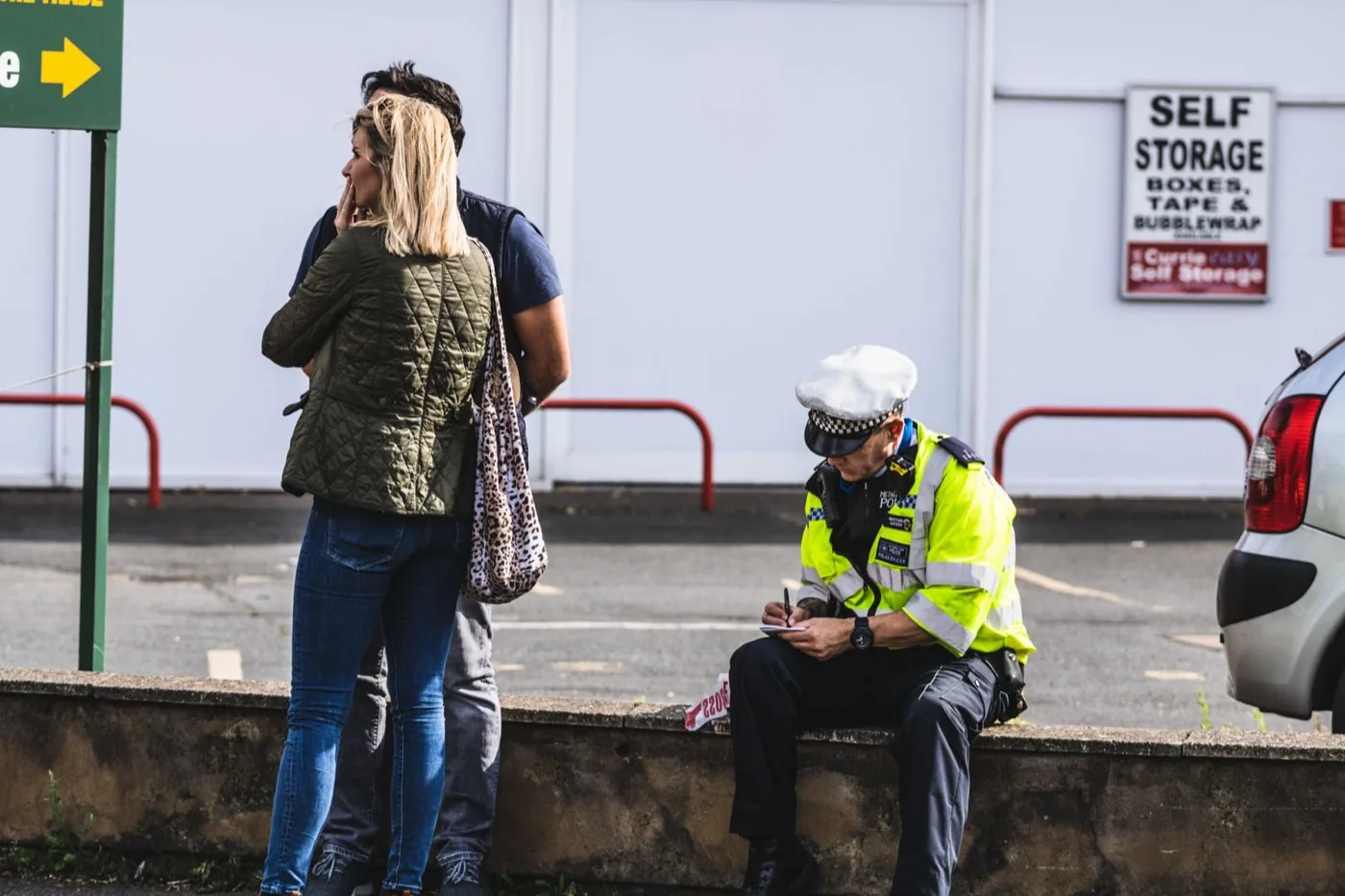
Benefits of Reliable Police Radio Communication
The investment in a dedicated, mission-critical radio network pays dividends in several critical areas:
- Officer safety — instant, reliable communication enables rapid backup requests and location sharing
- Situational awareness — control rooms have real-time visibility of officer positions and status
- Coordination at scale — major incidents can involve hundreds of officers across multiple forces, all communicating on the same system
- Resilience — dedicated infrastructure is less susceptible to congestion during emergencies when public mobile networks often fail
- Security — end-to-end encryption prevents criminal interception of sensitive operational communications
Limitations of Police Radio Systems for Businesses
The Airwave/TETRA system is designed exclusively for emergency services. Businesses and organisations that want professional-grade radio communications cannot access it — and even if they could, the cost and complexity of building or accessing a dedicated TETRA network would be prohibitive.
This leaves commercial users with a choice between:
- Traditional PMR (Private Mobile Radio) — limited range, requires licensing, analogue or basic digital
- DMR (Digital Mobile Radio) — better than analogue but still range-limited without repeaters
- PoC (Push-to-Talk over Cellular) — operates over mobile networks, offering nationwide coverage with professional features
For most businesses, PoC radio is now the most practical and cost-effective option — particularly for teams that operate across wide geographic areas.
How PoC Radio Complements Police Radio for Non-Emergency Users
PoC (Push-to-Talk over Cellular) radio works on the same fundamental principle as police radio — instant, PTT group communication — but runs over commercial 4G/5G mobile networks rather than dedicated TETRA infrastructure.
Here's how the two systems compare for commercial users:
| Feature | Airwave (TETRA) | iPTT PoC Radio |
|---|---|---|
| Network | Dedicated TETRA | 4G/5G Mobile |
| Coverage | Nationwide (UK) | Nationwide + International |
| Encryption | End-to-end (TETRA TEA) | End-to-end (TLS/AES) |
| PTT Communication | Yes | Yes |
| GPS Tracking | Yes | Yes |
| Group Calling | Yes | Yes |
| Availability | Emergency services only | Open to all businesses |
| Cost | Government contract | Flexible subscription |
For security companies, event management teams, logistics operations, and any organisation needing reliable group communication, PoC radio delivers a comparable feature set to what police and emergency services use — at a commercially accessible price point.
How iPTT Fits In
iPTT is a UK-based provider of PoC radio solutions designed for professional use. We supply a complete end-to-end communication system including:
- Purpose-built PoC radio handsets — rugged, reliable devices designed for demanding environments. Browse our full device range.
- Multi-network SIM cards — our SIMs roam across multiple UK networks, ensuring maximum coverage even in areas where a single carrier may have gaps. See our SIM options.
- Secure platform — all communications are encrypted end-to-end, with group management, dispatch features, and GPS tracking available through our platform
- UK-based support — our team provides setup, configuration, and ongoing support from the UK
Whether you're running a security operation, coordinating logistics, managing event staff, or overseeing a construction project, iPTT gives you professional-grade communication that mirrors the reliability and security standards of emergency services — without the restrictions or costs of dedicated TETRA infrastructure.
For more on how security in PoC radio compares to police systems, read our article on encryption and security in police radios.
In Summary
UK police radios are a sophisticated, purpose-built communication system built on TETRA technology and operating over the Airwave network. They provide secure, encrypted, nationwide communications that are critical to emergency services operations.
While civilian and commercial users can't access the Airwave network, the same principles — instant group communication, end-to-end encryption, GPS tracking, and nationwide coverage — are available through PoC radio solutions like iPTT.
If your organisation needs reliable, secure, professional radio communication that goes beyond the limitations of traditional walkie-talkies, iPTT is here to help.
Frequently Asked Questions
What radio system do UK police use?
UK police currently use the Airwave network, which is based on TETRA (Terrestrial Trunked Radio) technology. This provides secure, encrypted, nationwide communication for emergency services.
What is TETRA radio?
TETRA (Terrestrial Trunked Radio) is a digital radio standard designed for professional mobile radio users, particularly emergency services. It provides encrypted, reliable, two-way communication across dedicated infrastructure and supports voice, data, GPS, and direct-mode operation.
Can civilians use police radios?
No. The Airwave/TETRA network used by UK police is a closed, dedicated system restricted to authorised emergency services personnel. Civilian access is not permitted. Businesses requiring professional radio systems should consider PoC radio solutions instead.
What is the Emergency Services Network (ESN)?
The ESN is the UK government's next-generation communications platform for emergency services. It will replace Airwave and run over a dedicated 4G LTE network built on commercial infrastructure, offering broader data capabilities alongside voice. The project has faced delays and Airwave remains in use while ESN is developed.
What is the best radio alternative for businesses that work alongside emergency services?
PoC (Push-to-Talk over Cellular) radios from iPTT are an excellent alternative for non-emergency users. They operate over 4G/5G mobile networks, offer end-to-end encryption, GPS tracking, and nationwide coverage — similar capabilities to professional radio systems but designed for commercial use.
Are PoC radios secure enough for sensitive operations?
Yes. iPTT PoC radios use end-to-end encryption over 4G/5G networks, providing robust security for sensitive communications. While not equivalent to TETRA's dedicated infrastructure, they offer a high level of security suitable for most commercial and industrial operations.
How does iPTT differ from traditional walkie-talkies?
Unlike traditional walkie-talkies limited by line-of-sight and short range, iPTT PoC radios operate over 4G/5G mobile networks providing nationwide and international coverage. They also support GPS tracking, group calling, data messaging, and work through a dedicated app platform — making them far more capable for professional use.
Related Reading
Thank you for reading. Explore our full news and insights section for more articles on professional radio communication.
Need Professional Communication Solutions?
Contact iPTT to learn how our PoC radio systems can give your organisation the reliability and security of professional radio — without the restrictions of emergency-services-only networks.