SIM vs Micro SIM vs Nano SIM: Key Differences Explained
Three sizes, one chip — which card your device actually takes, and how to stop guessing at the counter
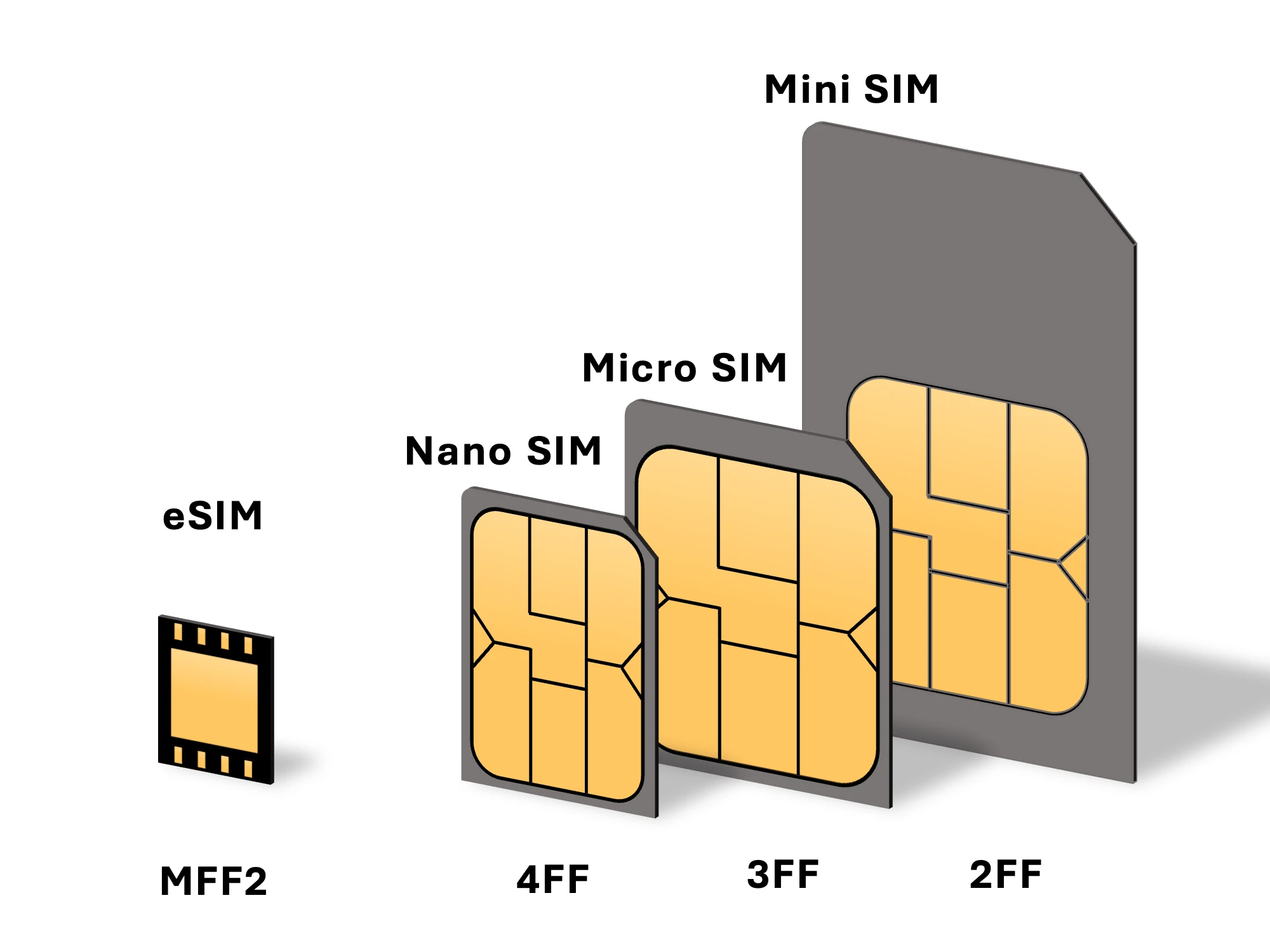
If you have ever bought a new phone or ordered a business SIM and got stuck at the counter wondering which size fits, you are not alone. The confusion around sim vs micro sim vs nano sim is one of the most common questions people search before buying a new device or switching networks. Here is the full breakdown, in plain language.
Clearing up the biggest trap first: “mini SIM” is not the middle size. It is the official name for the big 25mm x 15mm card most people call a standard SIM. So if a supplier asks whether you want mini or micro, mini means the larger one. Getting that backwards is the single most common reason a replacement card turns up in the wrong size.
If you already know the size you need and just want the card, you can explore our SIM cards and skip the explainer.
What Is a SIM Card, Really?
A SIM card is a small chip that stores your network identity, your phone number, and the authentication data that connects your device to a mobile network. Without it, your phone cannot make calls, send texts, or use mobile data.
The confusing part is not what a SIM does. It is the size. Over the years, manufacturers shrank the physical card while keeping the chip technology almost the same. That is the entire story behind sim vs micro sim vs nano sim:
- Standard SIM (officially mini SIM, or 2FF) — the large card that dominated for over a decade
- Micro SIM (3FF) — a smaller cut of the same chip
- Nano SIM (4FF) — the smallest removable version, and the one in almost everything today
The “FF” numbers are the form factors defined in the European standard ETSI TS 102 221, which is where the exact millimetre dimensions in this guide come from. Worth knowing that the true original SIM, 1FF, was the size of a credit card — so even the “standard” SIM was already a shrunk-down version.
You may also spot eSIM (MFF2) in the comparison above. That is the same technology again, soldered permanently into the device and provisioned over the air instead of being posted to you. It matters most in IoT hardware, where there is no room for a tray and no one to swap a card.
Standard SIM Card
A standard SIM measures 25mm by 15mm, roughly the size of a small stamp. It was the norm from the mid 1990s through the early 2010s and was used in almost every phone before smartphones took over.
You will still find standard SIMs in some older devices, POS machines, and a few industrial or M2M setups where the hardware has not changed in years. It is rare in new consumer phones now, but not extinct — which is exactly why it still trips people up when a replacement arrives.
Micro SIM Card
The micro SIM came along with devices like the iPhone 4 and early iPads, measuring 15mm by 12mm. It was essentially the same chip as a standard SIM with the excess plastic trimmed away.
This is also where people mix up micro SIM and mini SIM. As noted at the top: mini SIM is the official name for the standard SIM, not the micro one. So when someone asks for a mini SIM, they usually mean the older, larger card. Worth remembering next time you order a replacement.
Nano SIM Card
This is where most searches land, and for good reason. Anyone typing what is a nano sim card wants a quick, clear answer.
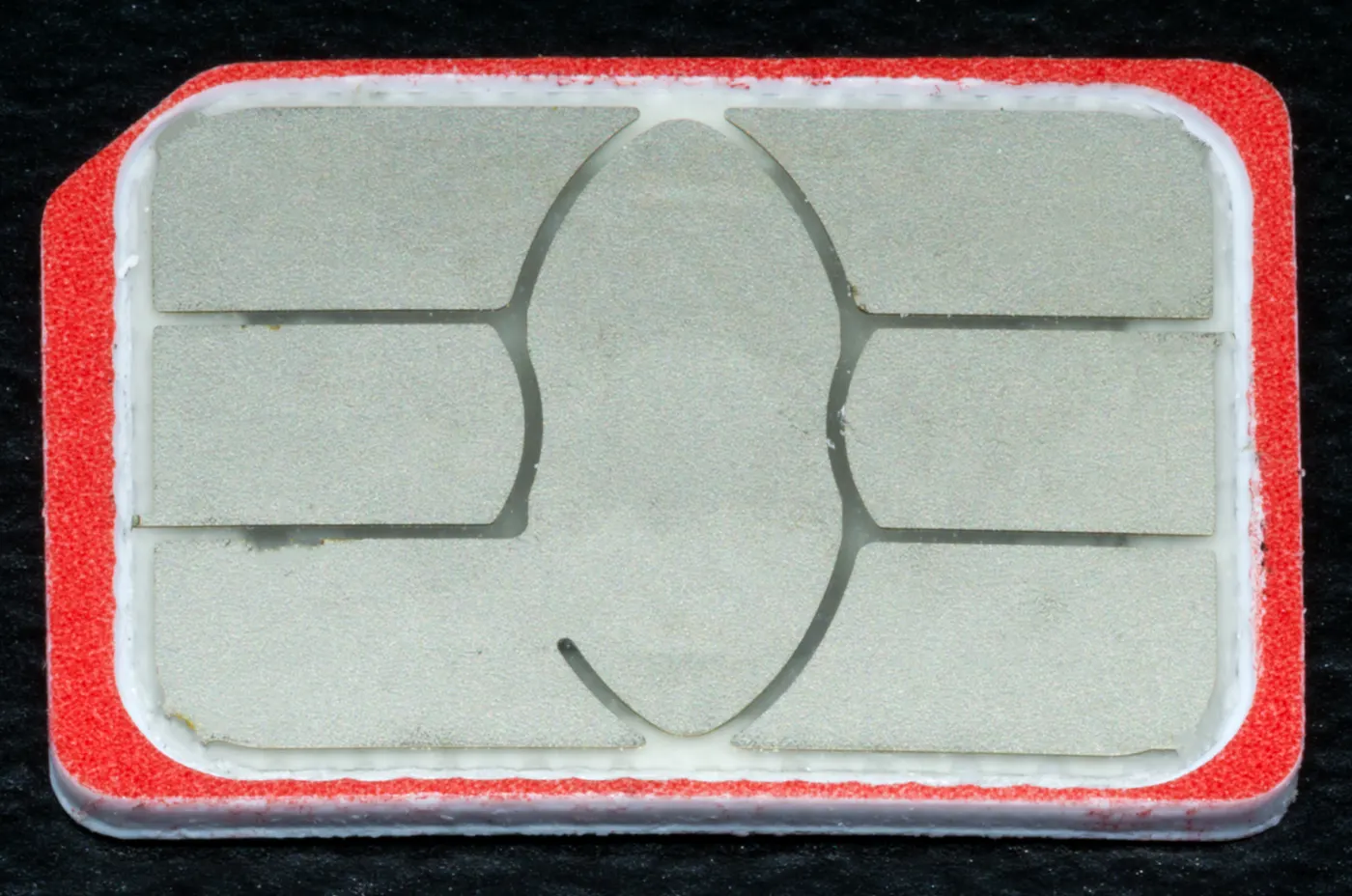
A nano SIM is the smallest SIM format in regular use. Nano SIM cards measure 12.3mm by 8.8mm, and they are slightly thinner than the earlier formats too — 0.67mm against 0.76mm. It has been the standard in iPhones since the iPhone 5, and in most Android flagship and mid range phones for years now.
Nano SIMs are also what you will find inside modern GPS trackers, IoT devices, and rugged push to talk radios, since smaller hardware needs a smaller card to fit the design.
A few quick facts worth knowing:
- Same chip and same data as the older formats — just less plastic around it
- It cannot go straight into an older micro or standard tray without an adapter sleeve
- Dual SIM setups need two nano cards, not one of each. Almost every dual SIM phone uses 4FF in both slots, which matters for logistics and field teams running a work number and a personal number on one handset
SIM vs Micro SIM vs Nano SIM at a Glance
| Feature | Standard SIM | Micro SIM | Nano SIM |
|---|---|---|---|
| Size | 25mm x 15mm | 15mm x 12mm | 12.3mm x 8.8mm |
| Thickness | 0.76mm | 0.76mm | 0.67mm |
| Form factor | 2FF (mini SIM) | 3FF | 4FF |
| In common use from | Mid 1990s | 2010 | 2012 |
| Common devices | Older phones, POS terminals | iPhone 4/4S, early iPads | Modern smartphones, IoT, rugged radios |
| Chip technology | Same | Same | Same |
The comparison makes one thing obvious. The debate around sim vs micro sim vs nano sim is really about size and tray fit, not performance. A nano SIM does not connect faster or work better than a standard one. It just fits into thinner, smaller devices. What actually changes your signal is the network behind the card, not the plastic around it.
How to Check Which Size You Need
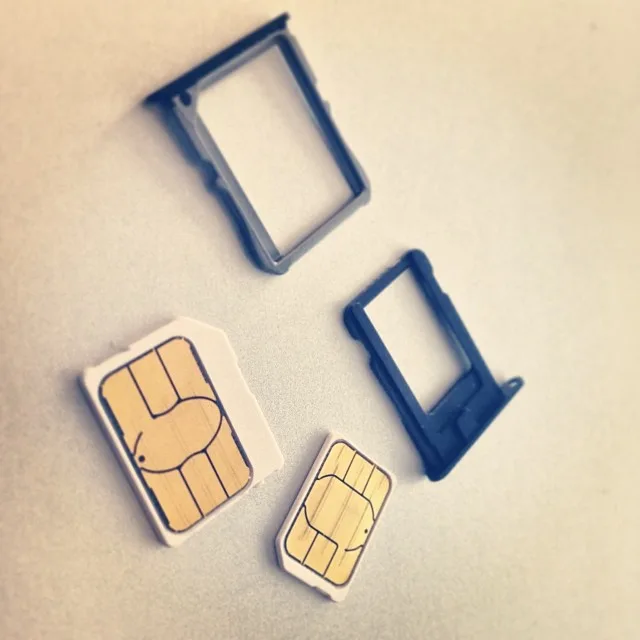
Before buying or ordering a replacement, it helps to confirm the exact size your device takes.
- Check your phone or device manual, or look under settings
- Pop out your existing SIM tray and compare it against your current card
- Search your device model along with “SIM size” online
- Ask your network provider directly, since most can confirm it in seconds
- Consider a multi size SIM card, which comes pre scored for standard, micro and nano, so you push out only the part you need
Should You Cut a SIM Card Yourself?
DIY SIM cutting kits exist, and some people use scissors or a punch tool in a pinch. It can work, but there is a real risk of nicking the gold contact area, which makes the card useless and leaves you waiting on a replacement.
There is a second catch specific to nano. Because a nano SIM is thinner as well as smaller, a card trimmed down from micro can sit slightly proud in the tray and jam it. For anyone running a business, especially one relying on constant connectivity, it is safer to order the correct size from your provider than to gamble with a pair of scissors.
Why Getting the Right SIM Matters for Business Communication

For construction crews, logistics teams and emergency response units, a SIM that does not fit — or a connection that drops at the wrong moment — is not a small inconvenience. It can mean lost coordination on site or a missed call that actually mattered.
This is where iPTT comes in. As a UK provider of Push to Talk over Cellular communication, iPTT supplies pre-sized, ready to use SIMs built for reliability in the field, not just for everyday phones.
- Rugged radios — durable PoC handsets built for tough job sites, starting with the iPTT P400 rugged radio and the larger-screen iPTT P500
- Vehicle-fitted radios — the M400 mobile radio for drivers and fleet cabs
- Mobile apps — push to talk from any smartphone, keeping teams connected on the move
- Dispatcher software — real time coordination and control for managing entire teams
- Multi network SIMs — nationwide UK coverage with automatic failover for constant signal
Because iPTT’s SIMs are multi network SIMs, they are less likely to drop out in low signal areas than a single network SIM — which matters a lot for teams working across construction sites, warehouses or remote logistics routes. All of them take a nano SIM, so the size question is settled before the hardware arrives.
Frequently Asked Questions
What is the difference between SIM, micro SIM, and nano SIM?
They are the same chip technology cut into three different physical sizes, from largest to smallest, to fit different generations of devices.
What is a nano SIM card used for?
Nano SIM cards power most modern smartphones, GPS trackers, IoT devices, and rugged communication radios that need a smaller card to fit compact hardware.
Can I use a nano SIM in a micro SIM slot?
Not directly. You would need an adapter sleeve, since the nano card is physically smaller than the micro slot’s tray cutout.
Are micro SIM and mini SIM the same thing?
No. Mini SIM actually refers to the original standard size SIM, while micro SIM is the smaller version that came later.
What SIM size do rugged PoC radios use?
Most modern rugged push to talk radios, including those supplied by iPTT, use nano SIM cards for compact, reliable connectivity.
Can I get a multi-network SIM from iPTT?
Yes, iPTT supplies multi network SIMs with nationwide UK coverage, built specifically for business, construction and emergency communication needs.
Final Thought
Whether you are replacing a personal phone SIM or setting up connectivity for an entire field team, understanding sim vs micro sim vs nano sim saves you a wasted trip and a lot of guesswork. Check the tray, remember that mini means the big one, and order the size rather than cutting it.
And if reliable, business grade connectivity is what you actually need, iPTT’s multi network SIMs and PoC solutions are built exactly for that.
Sources
- ETSI TS 102 221 — UICC-Terminal interface; Physical and logical characteristics — the standard that defines the 2FF, 3FF and 4FF dimensions quoted above.
The Right SIM, Ready to Use
iPTT supplies pre-sized multi network SIMs with nationwide UK coverage and automatic failover, so your team is connected the moment the hardware lands.