Critical Communications When It Matters Most: International Push to Talk's Role During a National Power Outage
Learn how emergency voice communication systems keep hospitals and NHS teams connected when power or IT systems fail during national power outage scenarios.
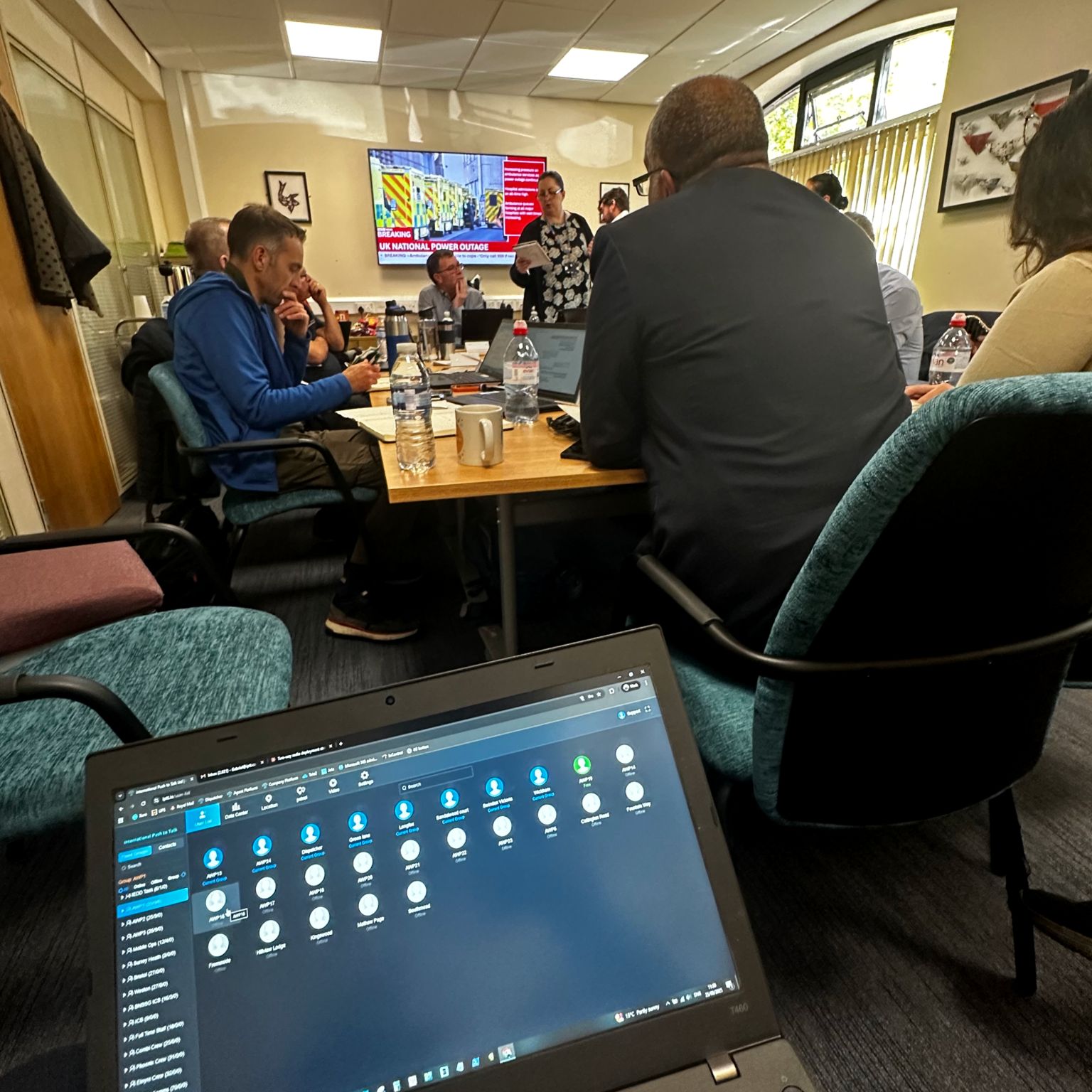
Avon and Wiltshire Mental Health Partnership NHS Trust (AWP) recently completed Exercise Rubin, a large-scale emergency preparedness exercise designed to test organisational response to a national power outage (NPO) and the reliability of an emergency voice communication system. The three-day exercise, held across multiple operational sites in September 2025, challenged teams to maintain critical services and coordinate care when traditional infrastructure for communication systems in healthcare failed.
The Challenge
When power systems collapse as simulated in an NPO scenario, organisations lose far more than electricity. IT systems go offline, and standard emergency communication systems become unavailable. For healthcare providers managing vulnerable populations, this creates an immediate crisis in coordination and situational awareness.
AWP recognised that in such an extreme scenario, independent critical communication systems would be essential. This is where reliable push to talk over cellular and two-way radio communication systems become not just helpful, but mission-critical. Learn more about iPTT push-to-talk solutions designed specifically for emergency scenarios.
International Push to Talk's Role
Throughout Exercise Rubin, International Push to Talk provided the critical communication backbone that kept AWP's incident response coordinated across distributed teams and organisational boundaries. Our push to talk and POC radio systems enabled seamless connectivity between the following teams. Explore our emergency communication devices:
- Gold Coordination Centres at six operational facilities
- Tactical Incident Coordination Centres managing regional response across the AWP boundary
- Strategic Incident Coordination Centre directing trust-wide strategy
- Frontline clinical and operational teams responding to real-time situations
- Partner hospitals and critical care sites beyond AWP's direct operational control
Beyond Traditional Boundaries
A defining challenge of the NPO scenario was the need to coordinate not just within AWP's own sites, but across organisational boundaries with external healthcare partners. Traditional network radio coverage limited by geographic coverage and organisational silos would have created dangerous communication gaps.
Our push-to-talk over cellular infrastructure overcame these limitations. By leveraging cellular networks, our systems extended reliable coverage across the entire AWP boundary and into partner facilities, enabling:
- Real-time coordination with external hospitals managing overflow patients or providing mutual aid
- Unified incident command across multiple organisations responding to the national crisis
- Seamless handover communications as patients moved between facilities
- Integrated situational awareness that included partners beyond AWP's direct control
When IT infrastructure failed, when power systems were unavailable, our emergency communication system and critical communication systems remained operational, providing clear, reliable communications that incident commanders depend on to make critical decisions affecting patient safety and service continuity across organisational boundaries.
Why NPO Scenarios Matter
National power outage exercises force organisations to confront uncomfortable realities about system interdependencies. They reveal dependencies on systems many teams take for granted. They expose communication gaps that become life-threatening when pressure peaks. Organisations must prepare for scenarios where traditional infrastructure fails.
For AWP, Exercise Rubin validated that independent emergency communication systems aren't optional luxuries—they're essential infrastructure for emergency response. According to NHS emergency preparedness guidelines, healthcare organisations must maintain coordination and service delivery even when conventional systems fail.
Lessons for Healthcare Resilience
Organisations preparing for genuine emergencies—whether power outages, major incidents, or system failures—should consider:
- Independence matters: Your emergency voice communication systems must work independently from power and primary IT infrastructure. This aligns with the WHO hospital emergency checklist recommendations.
- Reliability under pressure: When stakes are highest, push to talk and push-to-talk over cellular systems must be intuitive and dependable
- Cross-site coordination: Large healthcare organisations need communication systems in healthcare that work across multiple locations and operational hierarchies
- Testing works: Exercises reveal gaps and build confidence in response arrangements
Moving Forward
Exercise Rubin demonstrated that AWP has developed robust incident response capabilities. The organisation's preparedness, combined with reliable international push to talk infrastructure, creates genuine resilience.
As healthcare systems face increasing threats from cyber incidents to natural disasters, the lessons from Exercise Rubin apply broadly. Preparation, independent critical communication systems, and clear communication protocols aren't theoretical exercises.
International Push to Talk is proud to support organisations like AWP in building the resilience their patients and communities depend on, by ensuring that every emergency voice communication system functions when it matters most. Contact us to learn how we can help your organisation prepare for emergency scenarios.
FAQ
1. What are the biggest challenges facing communication during a national power outage?
Maintaining clear and reliable communication during a power outage is challenging due to IT system failures, lack of infrastructure backup, and coordination gaps across multiple teams and organisations. Independent communication systems like push-to-talk are essential to overcome these hurdles.
2. How does push-to-talk technology improve emergency communication in healthcare?
Push-to-talk over cellular and radio systems provide instant, reliable voice communication that works independently from traditional infrastructure, enabling real-time coordination between healthcare facilities, frontline teams, and partners during emergencies.
3. Why is interoperability important in emergency communication systems?
Interoperability ensures different teams and organisations can connect and communicate seamlessly, overcoming barriers such as geographic limits and organisational silos, which is crucial in large scale emergencies involving multiple stakeholders.
4. How should healthcare organisations prepare their communication systems for emergencies?
Healthcare organisations should invest in independent, tested backup communication solutions, conduct regular emergency drills like Exercise Rubin, and establish clear communication protocols to ensure fast, coordinated responses during power outages or crises.
5. What lessons does Exercise Rubin teach about emergency preparedness?
Exercise Rubin highlights the importance of independent communication infrastructure, reliability under pressure, cross-site coordination, and continual testing to identify and resolve gaps in incident response strategies. Preparation and resilient technology are key.
6. How can critical communication systems impact patient safety during emergencies?
Reliable communication systems allow incident commanders to make quick, informed decisions affecting patient care. They facilitate seamless handovers, resource allocation, and coordination even when conventional systems fail, directly enhancing patient safety and service continuity. Contact us to discuss your organisation's needs.
Need Healthcare Communication Solutions?
Contact iPTT to learn how our systems can help your organisation stay connected when it matters most, like they did for AWP during Exercise Rubin.